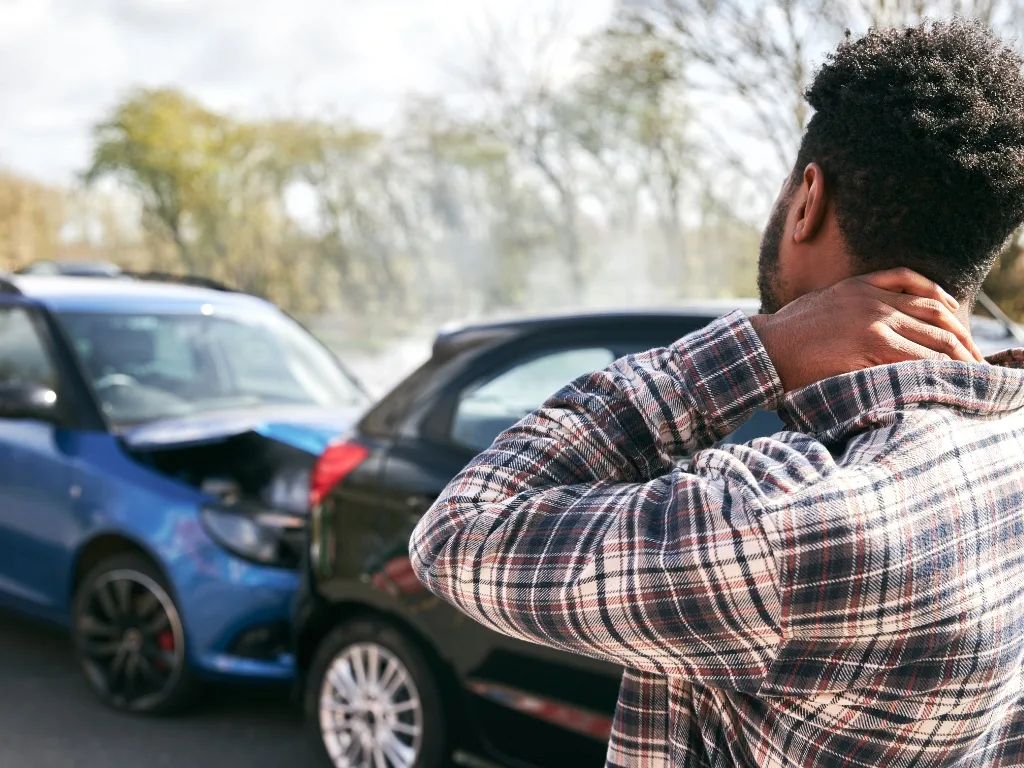
The minutes after a car accident are disorienting, and it is normal to feel unsure of what to do first. This guide is designed to bring clarity to that moment, one step at a time, so you can move forward with confidence rather than uncertainty. Knowing exactly what to expect, in the right order, is one of the most reassuring things you can have on hand when something unexpected happens on a Fresno road.
The Law Office of Sam Salhab has guided Fresno residents through the aftermath of car accidents for over fifteen years. If you have questions after a crash, a free, confidential consultation is available any time.
The First 60 Minutes After a Crash
A clear timeline can ease the pressure of deciding what matters most in the moment.
0 to 5 Minutes: Safety First
Check yourself and any passengers for injuries before doing anything else. Call 911 if anyone is hurt, if the crash involves significant damage, or if you are unsure. If your vehicle is drivable and it is safe to do so, move it out of the lane of traffic to prevent a second collision.
5 to 15 Minutes: Exchange and Document
Exchange names, contact information, driver’s license numbers, and insurance information with all other drivers involved. Photograph every vehicle, license plates, the surrounding intersection, and any visible damage. Identify and speak with anyone who witnessed the crash before they leave the scene.
15 to 30 Minutes: Speak With Responding Officers
If law enforcement responds, provide a factual account of what happened without speculating about fault. Record the responding officer’s name, badge number, and the report number, which you will need to request a copy of the report later.
30 to 60 Minutes: Notify and Preserve
Notify your insurance company that a crash occurred. Seek a medical evaluation, even if you feel fine in the moment. Save every piece of documentation you have gathered in one place; you will rely on it more than you expect in the days ahead.
Who Responds to Crashes in Fresno
Knowing which agency to expect can remove a layer of confusion during an already stressful moment.
The Fresno Police Department generally responds to collisions within the city limits, on city streets and local roads. The California Highway Patrol handles crashes on state highways and freeways, including CA-99, CA-41, CA-168, and CA-180, as well as unincorporated areas of Fresno County. If your accident occurred on the freeway, CHP is almost always who will respond and who will hold the report afterward.
If officers do not respond to a minor crash with no injuries, you can still file a report yourself at the nearest Fresno Police station or, for highway incidents, the CHP Fresno Area office. This keeps an official record even without an officer at the scene, which protects you later.
What Photos to Take
A simple mental checklist makes this step far less overwhelming in the moment.
- Wide shots of the full accident scene and intersection
- Close-ups of damage to every vehicle involved
- License plates and, if visible, VINs
- Traffic signals, signs, and any relevant road markings
- Skid marks, debris, or road hazards
- Weather and lighting conditions
- Visible injuries
- Airbag deployment and interior damage
These photos protect your peace of mind later by giving you, your insurer, and your attorney an accurate, unaltered record of exactly what the scene looked like.
Documents to Keep in One Place
Gathering these into a single folder, physical or digital, removes the stress of searching for them later when you need them most.
| Document | Why It Matters |
| Police or CHP report number | Needed to request the official report |
| Insurance information (yours and theirs) | Required for claims processing |
| Driver’s license details | Confirms identity and validity |
| Witness contact information | May be needed if liability is disputed |
| Medical records and bills | Establishes injury and treatment |
| Tow and repair receipts | Documents property damage costs |
| Rental car invoices | Recoverable expense during repairs |
| Lost wage documentation | Supports an economic damages claim |
The SR-1: California’s Most Overlooked Requirement
This is one part of the process that catches many Fresno drivers off guard, and understanding it now can prevent an unnecessary headache later.
Under California Vehicle Code § 16000, every driver involved in a crash must file an SR-1 form with the DMV within 10 days if the accident caused any injury, no matter how minor, a death, or property damage exceeding $1,000. This requirement applies regardless of fault and is entirely separate from any police report or insurance claim.
The $1,000 threshold is lower than most people expect. Given current repair costs, the large majority of crashes involving a body shop visit will meet this threshold. Missing the 10-day deadline can result in a suspended driver’s license, which remains in effect until the SR-1 is filed and accepted. You, your insurance agent, or your attorney can file it on your behalf, but the responsibility to ensure it reaches the DMV rests with you.
Common Mistakes in the First 24 Hours
Being aware of these in advance can spare you from decisions that feel small in the moment but create real complications later.
Saying “I’m fine” at the scene, even reflexively, can be used later to suggest you were not injured. Posting about the accident on social media gives insurers content to scrutinize. Forgetting to collect witness information becomes difficult to undo once people leave the scene. Repairing your vehicle before documentation is complete removes physical evidence that may matter. Skipping a medical evaluation allows injuries to go undocumented at the time they actually occurred. Giving a recorded statement to an insurance adjuster before understanding your situation can be used to minimize your claim.
If the Other Driver Has No Insurance
This situation feels frightening, but California law gives you a path forward, and knowing it in advance can ease that worry considerably.
If the at-fault driver has no insurance, your own uninsured motorist (UM) coverage applies. If they have insurance but not enough to cover your damages, underinsured motorist (UIM) coverage applies instead. In a hit-and-run, the same UM coverage generally applies as long as you can document the incident. In all of these situations, the evidence you gathered at the scene, photos, witness statements, and the police report, becomes especially important, since your own insurer will conduct its own investigation.
Symptoms That Appear Later
It is common to feel fine immediately after a crash and discover real injuries days later. This delay is medically well documented, not a sign that something is wrong with you for not noticing sooner.
According to NHTSA and the CDC, whiplash, concussions, soft tissue injuries, herniated discs, and shoulder or knee injuries frequently do not present full symptoms for several days after impact.
A peer-reviewed review published in Medical Science Monitor examined the relationship between vehicle damage and injury outcomes in low-velocity collisions and concluded that property damage is an unreliable predictor of injury risk; modern vehicles absorb crash energy in ways that can mask the true force involved. If new pain or symptoms appear in the days after a crash, seek medical evaluation promptly and keep records of when symptoms began.
What Happens After You File a Claim
Understanding the road ahead, even in broad strokes, tends to ease much of the uncertainty that builds in the days following a crash.
A claim typically moves through several stages: it is opened with the insurer, an adjuster is assigned, your vehicle is inspected, you receive medical treatment and document it, a liability investigation occurs, the insurer evaluates a settlement amount, negotiation follows, and the claim resolves either through settlement or, in a smaller number of cases, litigation. Most claims resolve well before reaching a courtroom.
Knowing this sequence in advance often brings real relief, there is a process, and it moves forward in a predictable way even when it does not feel like it in the first days.
You Do Not Have to Navigate This Alone
Every step above is manageable on its own, but together they can feel like a lot to carry while you are also recovering. That is exactly the support a good attorney provides: someone to carry the procedural weight so you can focus on healing.
The Law Office of Sam Salhab offers free, confidential consultations with 24/7 availability for urgent situations. There is no obligation, and no cost unless you recover.
Frequently Asked Questions
Should I call the police after a minor accident in Fresno?
Yes, even for accidents that seem minor. An official report creates a neutral record of what happened, which protects you if the situation becomes more complicated later. If officers cannot respond, you can still file a report at the nearest Fresno Police station or, for highway crashes, through the CHP.
Do I have to file an SR-1 with the California DMV?
Yes, if the crash caused any injury, a death, or more than $1,000 in property damage, regardless of fault. The form must reach the DMV within 10 days of the accident date. This is separate from any police report or insurance claim, and missing the deadline can lead to a license suspension.
Who responds to accidents on Highway 99 or Highway 41?
The California Highway Patrol generally handles crashes on state highways and freeways, including CA-99, CA-41, CA-168, and CA-180. The Fresno Police Department typically responds to crashes on local streets within the city.
How do I get a copy of my Fresno accident report?
You can request a copy from the Fresno Police Department if officers from that department responded, or from the CHP Fresno Area office if CHP handled the crash. You will need the report number, which the responding officer should provide at the scene.
What if I don’t feel injured until the next day?
This is common and medically documented. Concussions, whiplash, and soft tissue injuries often do not present full symptoms for several days. Seek medical evaluation as soon as new symptoms appear and document when they began; this protects both your health and your ability to pursue compensation if needed.
Can I leave the scene after exchanging information?
If the accident is minor with no injuries, you may exchange information and leave once you have documented the scene. If there are injuries, significant damage, or any dispute about what happened, remain until law enforcement arrives and has gathered what they need.
What should I say to the insurance adjuster?
Stick to basic facts: the date, time, and location of the crash. Avoid speculating about fault, minimizing your injuries, or giving a detailed recorded statement before you understand the full extent of your situation. You are not required to provide a recorded statement to the other driver’s insurer.
When should I contact a car accident attorney?
As early as possible, ideally within the first few days. Early involvement allows for evidence preservation, accurate SR-1 filing, and guidance through insurance communications from the very beginning, which tends to ease a great deal of the stress that builds when these tasks are left unaddressed.