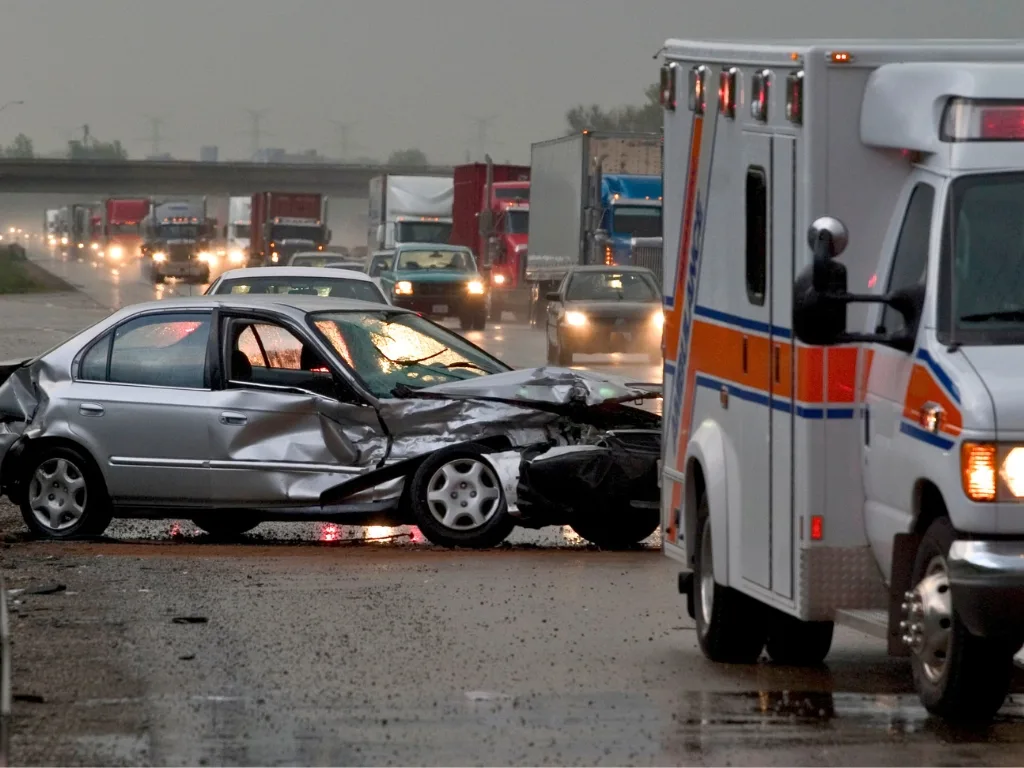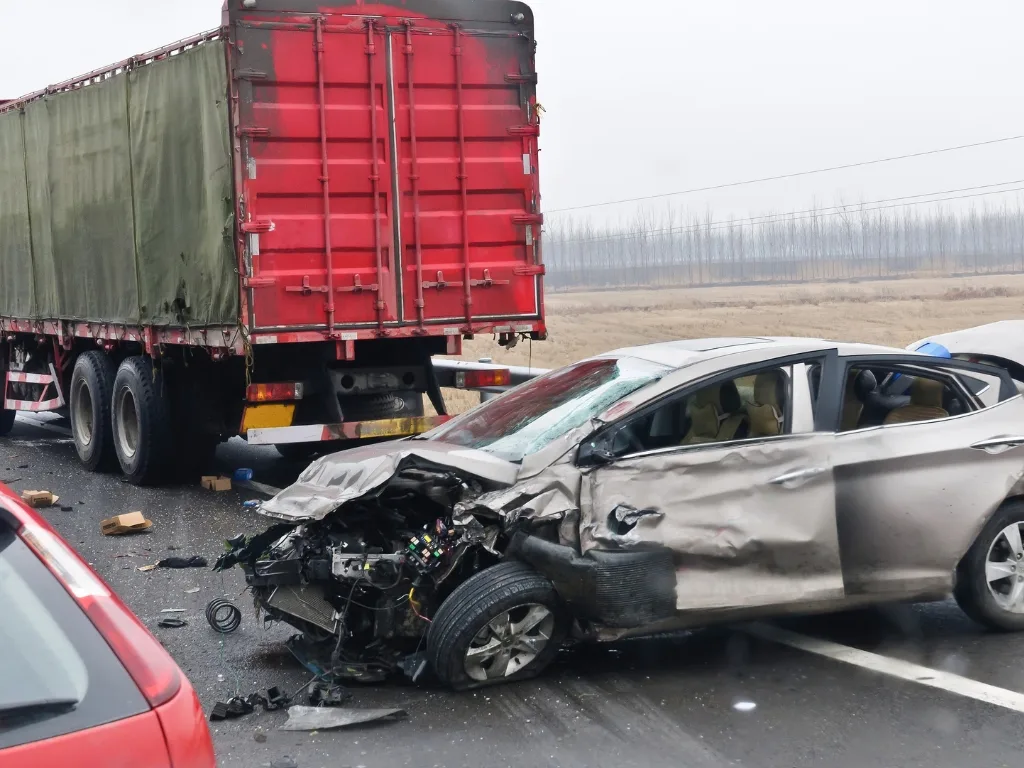
Being told “it wasn’t your fault” by a police officer, a witness, or even the other driver’s insurance adjuster does not mean your claim is finished. Liability determinations are made through a process involving evidence, insurance investigation, and often negotiation, not a single statement at the scene. According to NHTSA, there were an estimated 6.14 million police-reported crashes in the United States in 2023, and the overwhelming majority resolve through claims processes that most people never see explained in plain terms.
This article breaks down how liability is actually established, what a lawyer does in the weeks after a crash, and when legal counsel changes the outcome of a claim. If you were injured in a California car accident, the Law Office of Sam Salhab offers free, confidential consultations.
“Not at Fault” Does Not Automatically Mean You Get Paid
This is one of the most common misunderstandings after a crash. Even when fault seems obvious, claims get disputed, delayed, or undervalued for reasons that have nothing to do with who actually caused the collision.
- Disputed liability. The other driver’s insurer may dispute the police report or argue a different version of events.
- Shared fault allegations. California’s comparative negligence rule means insurers routinely try to assign you a percentage of fault to reduce their payout.
- Insufficient evidence. A police report alone often is not enough; insurers want physical evidence, witness statements, and documentation.
- Uninsured or underinsured drivers. Fault may be clear, but the at-fault driver’s policy limits may not cover your damages.
- Multiple potentially liable parties. Commercial vehicles, rideshare drivers, and government vehicles introduce additional layers of insurance and corporate liability.
- Conflicting witness testimony. Even minor inconsistencies between accounts can be used to slow down or dispute a claim.
How Liability Is Actually Established
Liability investigations rely on far more than a police report. NHTSA’s Crash Investigation Sampling System documents how professional crash reconstruction draws on vehicle inspections, scene measurements, roadway conditions, and physical evidence to determine exactly what happened. This is the same category of evidence attorneys work to preserve immediately after a crash, because insurers conduct their own parallel investigation using the same materials.
The Liability Timeline
| Stage | What Happens |
| Accident occurs | Scene evidence begins degrading immediately |
| Police respond | Report drafted; often contains errors or omissions |
| Medical evaluation | Establishes injury baseline and documentation |
| Evidence preservation | Surveillance footage, vehicle data, witness statements |
| Insurance investigation | Adjusters review evidence and assign fault percentages |
| Liability determination | Often contested; rarely final at this stage |
| Settlement negotiation | Most claims resolve here |
| Litigation (if necessary) | Reserved for unresolved disputes |
Why Property Damage Does Not Predict Injury Severity
A peer-reviewed review by Croft and Freeman, published in Medical Science Monitor, examined the available research comparing structural vehicle damage to injury risk, injury severity, and symptom duration in low-velocity collisions. The authors concluded that property damage is an unreliable predictor of injury risk or outcome, and that a substantial number of injuries occur in crashes involving little or no visible vehicle damage.
Modern vehicle design absorbs crash energy in ways that can produce minimal visible damage alongside significant occupant injury, or extensive damage with comparatively minor injury. This matters because insurers frequently argue that low property damage means minor injuries, a claim this research does not support.
What a Lawyer Actually Does in the First 30 Days
Most explanations of legal representation stop at “they handle the paperwork.” The actual work in the first month after a crash is considerably more specific:
- Ordering and reviewing the official crash report, and identifying factual errors
- Sending preservation letters to businesses and government agencies for surveillance footage before it is overwritten
- Interviewing witnesses while memories are still fresh
- Collecting electronic vehicle data (when available) from black boxes or telematics systems
- Obtaining complete medical records and bills from every treating provider
- Managing all communication with insurance adjusters so the client makes no inadvertent admissions
- Calculating both current and future damages, including lost earning capacity
- Identifying every potentially liable party, including employers, vehicle owners, and government entities
This work happens whether or not the case ever results in a lawsuit. The Bureau of Justice Statistics’ 2005 Civil Justice Survey of State Courts found that motor vehicle accident cases made up roughly a third to nearly 60% of tort trials nationally, depending on whether the comparison is against all civil trials or tort trials specifically, yet only a small share of filed claims of this kind are ever resolved by trial. The work described above, not courtroom litigation, is what determines most outcomes.
Insurance Adjuster Goals vs. Attorney Goals
Understanding the structural difference in incentives explains much of why these claims are contested in the first place.
| Insurance Adjuster | Attorney |
| Investigates the claim | Investigates liability independently |
| Represents the insurer’s interests | Represents the client’s interests |
| Evaluates the lowest reasonable payout | Works to maximize recoverable damages |
| Requests recorded statements early | Advises before any statement is given |
| Often pushes for a quick settlement | Values both current and future losses before settling |
Neither side is acting in bad faith by definition. The adjuster’s job, by design, is to minimize the insurer’s payout exposure. An attorney’s role exists specifically to provide a counterweight to that structural incentive.
Hidden Damages Many People Overlook
A common mistake is treating medical bills as the entirety of a claim’s value. California law allows recovery for a broader category of losses:
- Future medical treatment and rehabilitation
- Lost earning capacity, not just missed paychecks
- Prescription and ongoing therapy costs
- Transportation expenses related to treatment
- Home modifications for permanent injuries
- Pain and suffering
- Emotional distress
- Loss of enjoyment of life
According to the CDC, motor vehicle injuries frequently include delayed-onset conditions such as concussion, whiplash, and spinal injury that do not present full symptoms until days or weeks after a crash. Settling early, before the full scope of injury is understood, can permanently foreclose recovery of these damages.
When Hiring a Lawyer Is Especially Important
Certain circumstances meaningfully increase the value of legal representation.
Complex Liability Situations
Commercial vehicle and trucking crashes, rideshare accidents, and collisions involving government vehicles all introduce layered insurance policies and corporate liability rules that are difficult to navigate without legal experience. Disputed fault, rear-end collisions with conflicting accounts, and multi-vehicle pileups create liability disputes that benefit from independent investigation.
Serious or Long-Term Injuries
Traumatic brain injury, spinal injury, and any condition with long-term or permanent effects require damages calculations that go well beyond what an insurance adjuster’s initial offer typically reflects. Claims involving uninsured or underinsured motorists often require navigating your own policy’s UM/UIM provisions, a process insurers do not make straightforward.
When a Lawyer May Not Be Necessary
Not every accident requires legal representation, and a credible source should say so. If property damage is minor, no injuries occurred, liability is clearly admitted by the at-fault party’s insurer, and the insurer promptly pays full documented damages without dispute, a lawyer’s involvement may add limited value relative to the size of the claim.
That said, circumstances can change quickly. An injury that seems minor at the scene can develop into a diagnosed condition weeks later. If new symptoms appear, if the insurer reverses an initial position, or if a settlement offer seems inconsistent with documented losses, consulting an attorney before signing anything becomes important even in cases that initially looked straightforward.
How Evidence Disappears
Evidence in car accident cases has a short shelf life, and this is the practical reason attorneys move quickly:
Surveillance footage from nearby businesses is frequently overwritten within days. Dashcam recordings, including from other drivers, may be deleted automatically. Skid marks and other roadway evidence fade or are removed by weather and traffic. Vehicle damage evidence is compromised once a car is repaired. Electronic data recorders in modern vehicles can be overwritten by subsequent driving. Witness memories degrade measurably within the first week. Cell phone records showing distracted driving require formal requests that take time to process.
Talk to an Attorney Before You Decide
A free consultation costs nothing and provides clarity on whether your specific situation calls for legal representation. The Law Office of Sam Salhab offers confidential consultations with 24/7 availability for urgent matters.
Frequently Asked Questions
Is it worth hiring a lawyer if the insurance company already accepted fault?
Often yes, particularly if your injuries are significant or still developing. Accepting fault is different from agreeing to pay full and fair compensation. Insurers frequently accept liability while still disputing the value of the claim, especially for non-economic damages like pain and suffering, which have no fixed dollar value attached to them.
Can I still recover compensation if I’m partly at fault?
Yes. California follows pure comparative negligence, meaning your compensation is reduced by your percentage of fault rather than eliminated. If you are found 20% at fault and your damages total $100,000, you can still recover $80,000.
What if the police report contains mistakes?
Police reports are not infallible and can be challenged with additional evidence. Officers sometimes rely on incomplete information, misjudge fault based on limited time at the scene, or make factual errors about vehicle positions or statements. An attorney can supplement or formally dispute an inaccurate report using independent evidence.
Can I recover damages if the at-fault driver is uninsured?
Yes, through your own uninsured motorist (UM) coverage if you carry it. Underinsured motorist (UIM) coverage applies if the at-fault driver has insurance, but not enough to cover your full damages. These claims are filed against your own insurer, which creates a different and sometimes more adversarial dynamic than a standard third-party claim.
What happens if new injuries appear weeks after the crash?
This is common with soft tissue injuries, concussions, and spinal conditions that do not present full symptoms immediately. If you have not yet settled, ongoing medical documentation can be added to your claim. If you have already signed a settlement release, recovering for new injuries becomes extremely difficult, which is one of the strongest reasons not to settle before reaching medical stability.
Should I talk to the other driver’s insurance company?
Generally, no, not without legal guidance. You are not obligated to give a recorded statement to the other party’s insurer, and anything you say can be used to minimize your claim later. Statements made informally at the scene or during a casual phone call can be taken out of context during a later dispute.