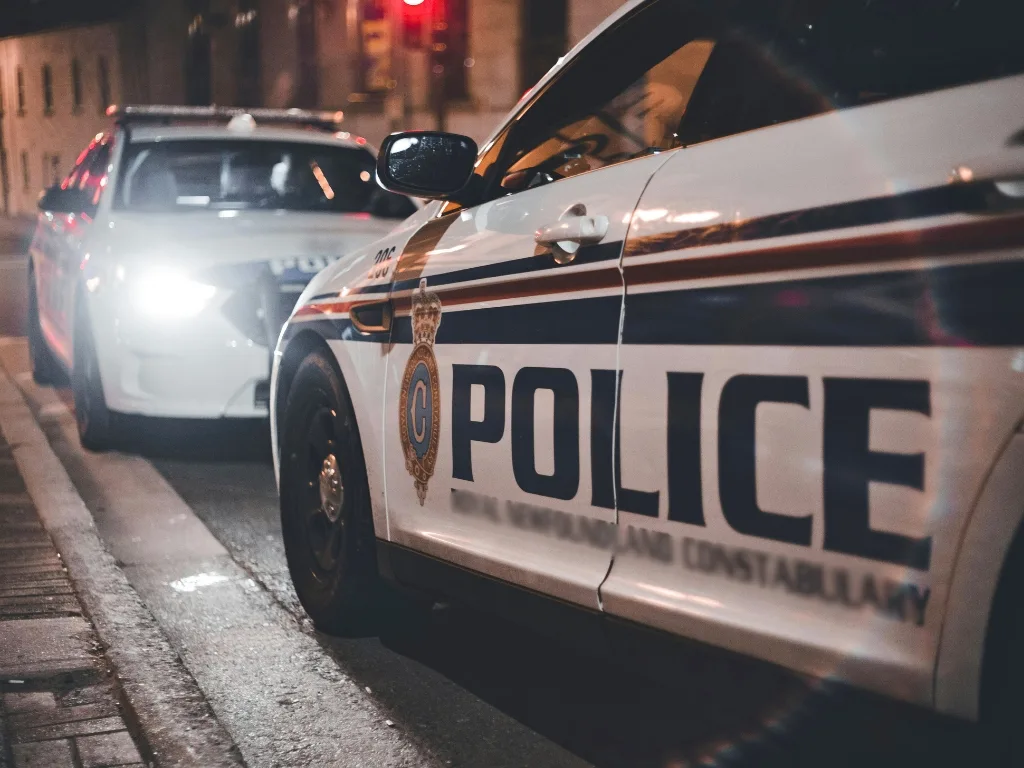
A California police misconduct attorney represents individuals whose constitutional rights were violated by law enforcement officers, correctional staff, sheriff’s deputies, or government agencies. These cases pursue accountability through federal and state civil rights litigation — and in California, both the legal tools and the evidentiary infrastructure to support that litigation are more developed than almost anywhere else in the country.
The Law Office of Sam Salhab represents clients across California in criminal and civil rights matters where the conduct of law enforcement has raised serious constitutional questions. If you were harmed by police misconduct, understanding what qualifies legally — and what evidence is needed — is the foundation of any viable claim.
What Qualifies as Police Misconduct?
Police misconduct is not defined by whether an officer intended harm. It is defined by whether official conduct violated a constitutional or statutory right. The U.S. Department of Justice Civil Rights Division identifies the most common categories of actionable police misconduct as: excessive force, false arrest, unlawful search and seizure, sexual misconduct, fabricating evidence, coercion or intimidation, deliberate indifference to serious medical needs in custody, and racial profiling.
Each of these can form the basis of a civil rights claim. They do not require a criminal conviction of the officer. They do not require that internal affairs sustained a complaint. What they require is that a government actor, acting under color of law, deprived someone of rights protected by the federal Constitution or California law.
What California’s Stop Data Reveals
California tracks police-citizen interactions at a scale no other state matches. The 2026 RIPA Board Report, analyzing 2024 data from 533 California law enforcement agencies, recorded 5,065,428 stops and 13,000 civilian complaints statewide. Of those stops, 91% were officer-initiated.
The data shows persistent racial disparities. Individuals perceived as Black were stopped 127.87% more often than their share of California’s residential population would predict. Individuals perceived as Pacific Islander were stopped 57.53% more than expected. The RIPA Board noted that the rate of sustained complaints for racial and identity profiling remained very low relative to the volume of stops — a gap that reflects the limits of internal accountability mechanisms and the role civil rights litigation plays in filling them.
Why This Data Matters in Litigation
RIPA stop data, compiled by the California DOJ’s RIPA program, is publicly available and agency-specific. In civil rights litigation, an agency’s own stop data can establish patterns of racially disparate enforcement that support both individual claims and broader Monell challenges to department-wide policies or customs. Statistical evidence of systematic disparity is not merely background context — it is admissible evidence.
The Legal Framework for Misconduct Claims
Two legal vehicles carry the majority of California police misconduct cases.
42 U.S.C. § 1983 is the primary federal remedy, allowing individuals to sue state and local officials who violate constitutional rights under color of law. Individual officers, sheriff’s deputies, correctional staff, and other government actors can all be defendants. Cities and counties face liability under the Monell doctrine when unconstitutional conduct results from an official policy, a departmental custom, or a failure to train officers adequately.
California Civil Code § 52.1 — the Bane Act — provides a parallel state-law claim against anyone who interferes with constitutional or statutory rights through threats, intimidation, or coercion. Unlike § 1983, the Bane Act does not require proof of discriminatory intent and is not subject to the federal qualified immunity defense. Both claims are typically filed together in California police misconduct cases.
Qualified Immunity and Its Limits
Qualified immunity is the federal doctrine most often used to shield individual officers from personal § 1983 liability. It bars claims unless the officer violated a clearly established constitutional right — a standard that courts have applied narrowly, sometimes dismissing claims even when misconduct is undisputed.
The Bane Act eliminates this barrier in state court. For California plaintiffs, the availability of a parallel state claim not subject to qualified immunity is one of the most significant advantages in California civil rights litigation.
When Misconduct Reflects a Department-Wide Problem
Individual officers do not always act alone. When an agency’s policies, training failures, or tolerated customs produce repeated constitutional violations, the institution itself becomes a proper defendant. The California DOJ’s Police Practices Section investigates systemic unconstitutional policing and can initiate pattern-or-practice enforcement actions against agencies — a parallel track to private civil rights litigation.
California’s Attorney General coordinates a broader 21st Century Policing framework, implementing the Racial and Identity Profiling Act, statewide use-of-force reporting, and implicit-bias training standards, aimed at improving accountability and transparency statewide. When an agency’s conduct falls short of these standards, the gap between policy and practice can itself be evidence of the training failures that support Monell liability.
Evidence That Strengthens a Misconduct Claim
Body camera footage is the most direct evidence in police misconduct cases — but it is not the only kind. Dashcam recordings, bystander videos, and surveillance footage captured near the scene can corroborate or contradict the official account. Medical records documenting injuries are essential where excessive force is alleged. Dispatch recordings, the arrest report, and the officer’s written use-of-force justification all provide the baseline record from which a claim is built.
Institutional evidence matters equally. Prior misconduct complaints against the same officer, internal affairs investigation records, and use-of-force reports are obtainable through public records requests. California’s SB 1421 and AB 748 transparency reforms — among the most expansive officer misconduct disclosure laws in the country — require agencies to release records of officer-involved shootings, serious uses of force, and sustained findings of dishonesty or sexual assault. The California AG’s police complaints page provides official guidance on how to file complaints and obtain records — a step worth taking alongside legal consultation.
What Compensation Is Available
Successful police misconduct plaintiffs can recover compensatory damages for medical expenses, lost income, and emotional distress. Punitive damages are available against individual officers whose conduct was malicious or showed reckless disregard for constitutional rights. The Bane Act provides statutory civil penalties in addition to compensatory damages. Attorney’s fees are recoverable under 42 U.S.C. § 1988 when a § 1983 plaintiff prevails — making civil rights representation financially accessible even for plaintiffs without resources to fund litigation upfront.
Beyond individual compensation, civil rights litigation can produce injunctive relief requiring departments to change use-of-force policies, revise training programs, or implement civilian oversight measures. Court-ordered consent decrees have produced structural reforms in some of California’s largest law enforcement agencies.
Act Before Evidence Disappears
Body camera footage retention schedules vary by agency, and some departments overwrite recordings within 60 to 90 days if not flagged for preservation. Government Claims Act filings against public entities must be submitted within six months of the incident. The two-year § 1983 limitations period and the Bane Act’s parallel deadlines begin running from the date of the violation.
The Law Office of Sam Salhab offers free, confidential consultations with 24/7 availability. Document everything you remember — the timeline, what was said, what was done — and contact the firm before any evidence or filing window is lost.
Frequently Asked Questions
What is the difference between filing a police complaint and filing a lawsuit?
A complaint filed with an agency’s internal affairs division or through the California AG’s complaint process is an administrative proceeding. It can trigger an internal investigation but does not result in compensation and is not controlled by the complainant. A civil rights lawsuit is a separate legal action filed in court that pursues damages and accountability through litigation. The two are not mutually exclusive — filing a complaint can generate records useful in a subsequent lawsuit.
Can I sue a police department even if no criminal charges were filed against the officer?
Yes. Civil rights claims are independent of criminal prosecutions. An officer can avoid criminal charges and still face civil liability for constitutional violations. The standard of proof in a civil case — preponderance of the evidence — is lower than the criminal standard. Many successful civil rights cases arise from incidents where the district attorney declined to prosecute.
What is a pattern-or-practice claim, and when does it apply?
A pattern-or-practice claim targets an institution rather than an individual officer. It applies when an agency’s official policies, tolerated customs, or training failures produce repeated constitutional violations. The Monell doctrine allows cities and counties to be sued on this basis. These claims are supported by evidence of multiple incidents, statistical data, prior complaints, and internal policy documents — which is why California’s RIPA stop data and SB 1421 disclosure records are so valuable in misconduct litigation.
What types of force can lead to a police misconduct lawsuit?
Any force disproportionate to the threat posed can be actionable — including strikes, chokeholds, taser deployment, K-9 attacks, and use of deadly force against non-threatening individuals. Force used against someone who is already restrained or compliant, or force that continues after a threat has ended, is particularly difficult to legally justify. The Fourth Amendment’s reasonableness standard applies, evaluated from the perspective of a reasonable officer on the scene.
Does qualified immunity mean my case will be dismissed?
Not necessarily — and not in a Bane Act claim. Qualified immunity applies only to § 1983 claims against individual officers, and it requires courts to assess whether the violated right was clearly established at the time. The Bane Act, California’s parallel state claim, carries no qualified immunity defense. Filing both claims simultaneously — as most California civil rights attorneys do — preserves the strongest possible path to officer liability regardless of how a court rules on the federal immunity question.
How long do I have to file a police misconduct lawsuit in California?
The standard limitations period for § 1983 claims in California is two years from the date of the incident. A Government Claims Act filing against a public entity is required within six months of the incident before a lawsuit can proceed — failure to file on time can bar the claim entirely. Some circumstances, including incarceration, may toll these periods. Because multiple deadlines run simultaneously, consulting an attorney promptly is essential.
What California transparency laws help build misconduct cases?
SB 1421 requires California law enforcement agencies to release records of officer-involved shootings, serious uses of force, and sustained findings of dishonesty or sexual assault. AB 748 requires release of body camera and dashcam footage from those incidents. Together, these laws give civil rights attorneys access to documentary evidence that was shielded from public disclosure before 2019 — significantly expanding the evidentiary foundation available in misconduct litigation.