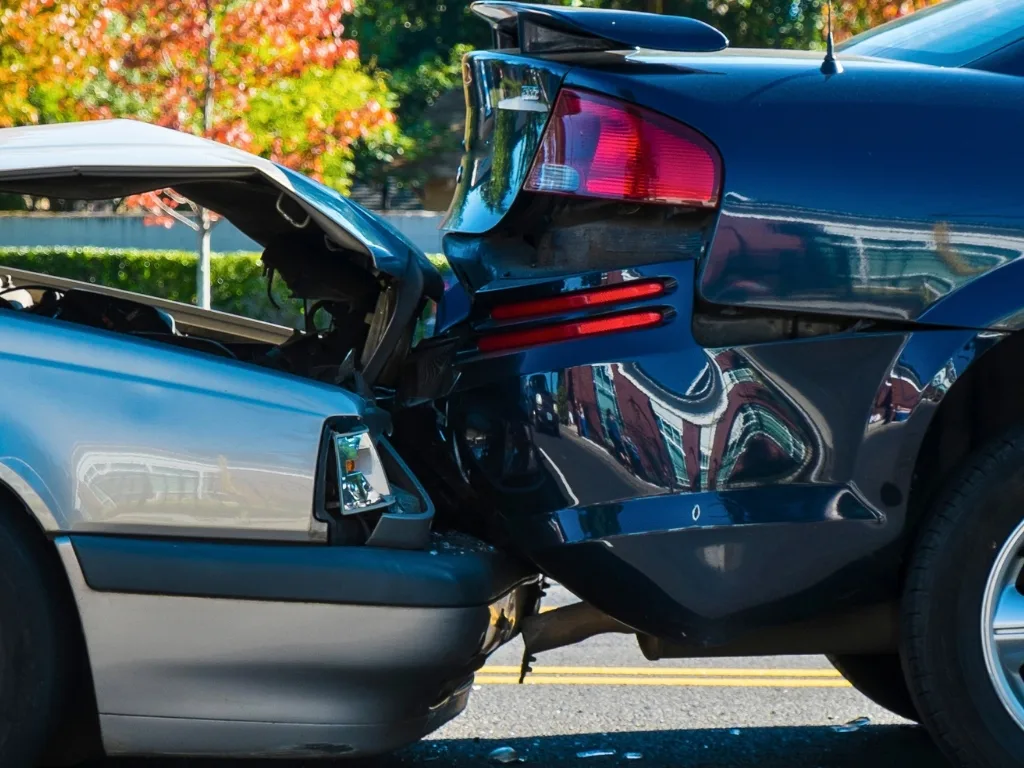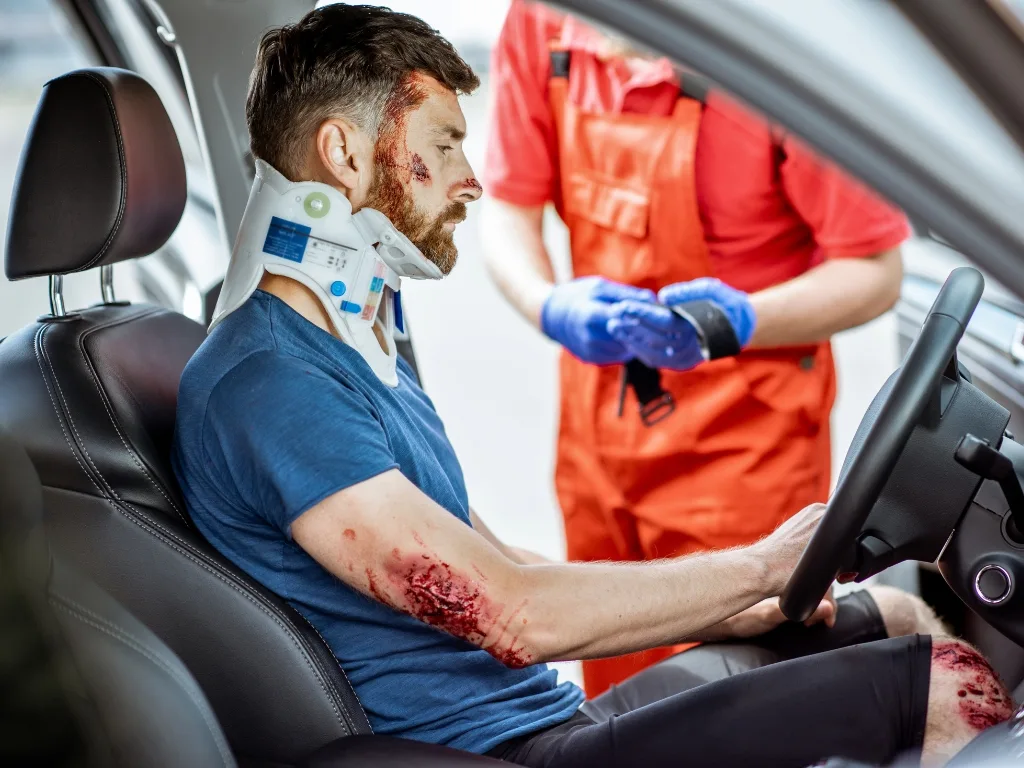
A head-on collision is unlike almost any other type of crash. Two vehicles traveling toward each other combine their speed into a single, devastating impact, and survivors often face injuries that reshape the rest of their lives. Fresno’s rural highways and two-lane roads outside the city core see these crashes with troubling regularity, often on stretches where a single mistake, a wrong-way turn, an unsafe pass, a moment of distraction, has catastrophic consequences.
The Law Office of Sam Salhab represents injury victims and grieving families across Fresno and Orange County, and head-on collision cases demand a level of investigation and advocacy matched to the severity of what’s at stake. These are rarely simple insurance claims; they are fights for a client’s ability to work, walk, and live independently again.
Why Head-On Collisions Cause Catastrophic Injuries
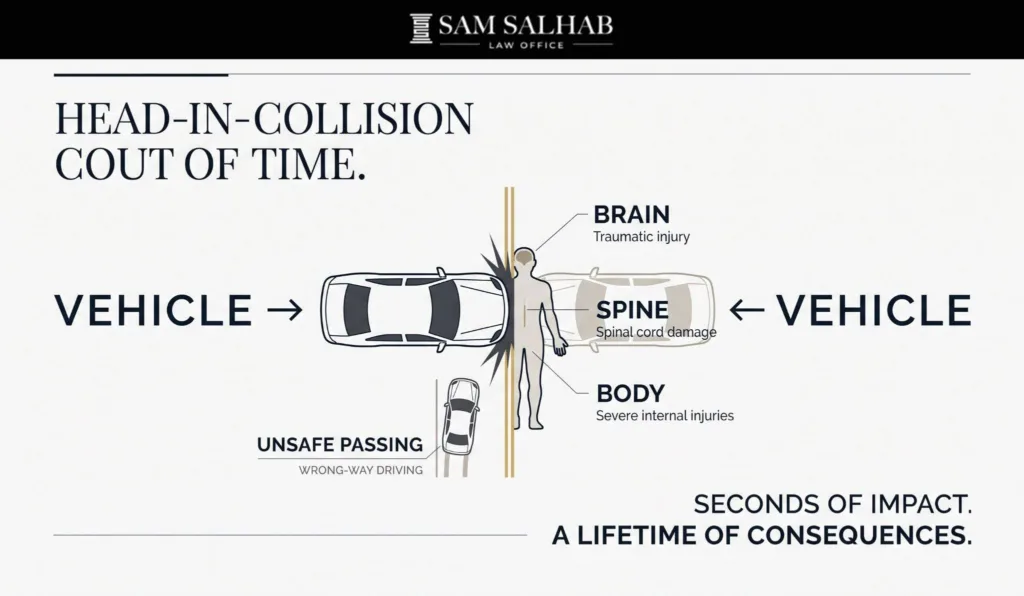
The physics of a head-on collision are brutal. When two vehicles traveling toward each other collide, the combined force of impact is far greater than a rear-end or side-impact crash at the same individual speeds, because both vehicles’ momentum works against each other rather than in the same direction.
The Injuries That Commonly Result
Occupants frequently suffer traumatic brain injury, spinal cord damage, crushed limbs, and severe internal injuries, harm that a standard fender-bender almost never produces. These injuries often require emergency surgery, extended hospitalization, and a recovery process that can last years or become permanent.
What Causes Head-On Collisions on Fresno Roads
Head-on collisions are rarely accidents in the truest sense; they typically trace back to a specific, identifiable violation. Under Vehicle Code § 21460, a driver generally may not cross a double solid yellow line except in narrow, defined circumstances like a left turn or a legal pass, and a driver who crosses into oncoming traffic outside those exceptions is presumed to have violated the law.
Unsafe Passing and Rural Two-Lane Roads
Fresno County’s rural highways, many of them two-lane roads connecting agricultural areas to the city, see a disproportionate share of head-on crashes when a driver attempts to pass a slower vehicle without enough visibility or room to complete the maneuver safely. Distraction, fatigue, and impairment all compound the danger on these stretches, where there is often no median to prevent a lapse in attention from becoming a fatal crossover.
Wrong-Way Driving: A Documented and Growing Danger
Wrong-way collisions on divided highways represent some of the most severe head-on crashes on the road. A 2026 AAA Foundation for Traffic Safety analysis of federal crash data found that 4,164 fatal wrong-way crashes occurred on U.S. divided highways between 2014 and 2023, resulting in 5,730 deaths, and that fatal wrong-way crashes increased even faster than overall traffic fatalities over that period.
Who Is Most Likely to Cause a Wrong-Way Crash
The same research found that alcohol-impaired drivers, older drivers, and drivers without a valid license carry a higher risk of causing a fatal wrong-way crash, with earlier federal data showing that roughly six in ten wrong-way crashes involve a driver who had been drinking. This pattern matters directly for injury claims, since a wrong-way crash caused by an impaired driver often supports more than a standard negligence claim.
Who Can Actually Pay for a Catastrophic Head-On Collision?
In a catastrophic head-on collision, identifying the negligent driver is only the beginning. The more important question is what insurance or other source of recovery is actually available to cover years of medical care, lost earning capacity, rehabilitation, and permanent disability. The California Department of Insurance explains that liability coverage pays for injuries caused by the insured, while uninsured/underinsured motorist coverage can protect an injured person when the at-fault driver has no insurance or insufficient limits.
Looking Beyond the Name on the Police Report
A thorough investigation identifies every potentially responsible party, which may include the other driver, the driver’s employer if the crash occurred in the course of employment, the vehicle owner, a vehicle manufacturer if a defect contributed to the collision, or a government entity or roadway contractor where a maintenance issue played a role. Each of those parties can open a separate source of recovery, from the at-fault driver’s liability policy to commercial or employer coverage, a client’s own uninsured/underinsured motorist coverage, or another applicable insurance policy entirely.
Why This Distinction Can Be Enormous
The California Department of Insurance notes that standard auto policies can carry substantially different liability limits, and UM/UIM coverage exists specifically for situations where the responsible driver’s insurance is inadequate to cover the injury. A claim involving surgery, permanent disability, or lifelong care can easily be worth far more than the at-fault driver’s available policy limits, which is why the investigation should never stop at the first insurance card found at the scene.
Punitive Damages When Recklessness or Impairment Is Involved
California law allows an injured victim to seek more than compensation for their losses when a defendant’s conduct rises to the level of malice, oppression, or fraud. Under Civil Code § 3294, a plaintiff who proves this by clear and convincing evidence may recover punitive damages meant to punish the defendant and deter similar conduct.
Why DUI Cases Often Qualify
In Taylor v. Superior Court, the California Supreme Court held that driving while voluntarily intoxicated can constitute malice under Civil Code § 3294 when the circumstances show a conscious disregard for the probable dangerous consequences to others. A head-on collision caused by a drunk driver, particularly one with a prior DUI history, is exactly the kind of case where punitive damages may be available in addition to standard compensatory damages.
Wrongful Death Claims After a Fatal Head-On Crash
The severity of head-on collisions means that some do not end in survival. Under Code of Civil Procedure § 377.60, California allows a surviving spouse, domestic partner, children, and certain other family members to bring a wrongful death claim against the party responsible for a fatal crash.
What a Wrongful Death Claim Can Recover
These claims can include funeral and burial expenses, the income the deceased would have earned, and compensation for the loss of companionship and support the family has suffered. California generally requires this claim to be filed within two years of the date of death, though exceptions can apply depending on the circumstances.
What Compensation May Be Available
Head-on collisions produce some of the most severe injury claims in personal injury law, and settlement values reflect that reality far more often than in other crash types. While every case depends on its specific facts, general ranges for California personal injury claims often fall into the following categories:
| Injury Severity | Typical Settlement Range |
| Minor | $3,000 – $15,000 |
| Moderate | $15,000 – $75,000 |
| Severe | $75,000 – $500,000+ |
| Catastrophic | $500,000 – millions |
Why Head-On Cases Often Reach the Highest End
Traumatic brain injury, spinal cord damage, and cases involving wrongful death or punitive damages regularly push head-on collision claims into the catastrophic range, where future medical care, lost earning capacity, and long-term disability all factor into the final value. The strength of the liability evidence, particularly proof of a DUI, a wrong-way violation, or an unsafe pass, often directly shapes how high that value can go.
Acting Before Evidence and Time Run Out
California generally requires injury victims to file a lawsuit within two years of the crash date under Code of Civil Procedure § 335.1. In a catastrophic injury case, evidence like skid marks, vehicle positioning, and witness accounts can change or disappear quickly, making early investigation critical to proving exactly how the crash happened.
Why Early Representation Matters Most in These Cases
A head-on collision with catastrophic injuries often triggers an immediate, well-resourced investigation from the at-fault driver’s insurer, particularly when a DUI or reckless driving citation is involved. Having an attorney preserve the police report, crash scene evidence, and toxicology results as early as possible protects a claim that will likely need to account for years of future medical care.
Why Choose the Law Office of Sam Salhab
Catastrophic injury cases require more than a quick settlement; they require a full accounting of what a client’s life now looks like, including the medical care they will need for years to come. Our personal injury team investigates head-on collisions thoroughly, from the mechanics of the crash to every available source of recovery.
What Clients Can Expect
The firm’s Fresno personal injury office offers free consultations, and every client is treated as a person facing a life-altering event, not a case to be processed and closed quickly. That commitment shapes how the firm builds every head-on collision and wrongful death claim from the very first conversation.
Moving Forward After a Head-On Collision
A head-on collision changes lives in an instant, and the road to fair compensation depends on proving exactly what caused the crash, identifying every party and policy that can actually pay for it, and understanding what full recovery requires. Whether the case involves a wrong-way driver, a DUI, or an unsafe pass on a rural Fresno highway, building a strong claim starts with a thorough investigation from day one. Anyone facing a catastrophic injury or the loss of a loved one in a Fresno head-on collision is welcome to reach out for a conversation about what happened and what options may be available.
What typically causes a head-on collision in California?
Head-on collisions often result from a driver crossing a double yellow line during an unsafe pass, a wrong-way entry onto a divided highway, or impaired or distracted driving. Vehicle Code § 21460 governs when crossing a double yellow line is legal, and a violation often supports a strong negligence claim.
Why are wrong-way collisions so often fatal?
Wrong-way crashes typically occur at highway speeds with the full combined force of both vehicles’ momentum, and research shows alcohol impairment is a factor in a large share of these crashes. A 2026 AAA Foundation for Traffic Safety analysis found that fatal wrong-way crashes have increased faster than overall traffic fatalities over the past decade.
What if the at-fault driver doesn’t have enough insurance to cover my injuries?
Uninsured/underinsured motorist coverage, which the California Department of Insurance requires insurers to offer with every policy, can cover the gap between the at-fault driver’s available coverage and the actual cost of a catastrophic injury. A thorough investigation should also identify other potentially responsible parties, such as an employer or vehicle owner, who may open additional sources of recovery.
Can I recover punitive damages if a drunk driver caused my head-on collision?
Possibly. California courts have held that driving while voluntarily intoxicated can support punitive damages under Civil Code § 3294 when the circumstances show a conscious disregard for the safety of others. This is in addition to, not instead of, standard compensatory damages for medical costs, lost income, and pain and suffering.
Who can file a wrongful death claim after a fatal head-on crash in California?
Under Code of Civil Procedure § 377.60, a surviving spouse, domestic partner, children, and certain other family members generally may bring a wrongful death claim against the at-fault party. The claim can include funeral expenses, lost future income, and compensation for the loss of companionship and support.
What kinds of injuries are most common in head-on collisions?
Traumatic brain injury, spinal cord damage, crushed limbs, and severe internal injuries are common because of the combined force involved when two vehicles collide head-on. These injuries frequently require emergency surgery and long-term or permanent care.
How long do I have to file a claim after a head-on collision in California?
Most personal injury claims must be filed within two years of the crash date under Code of Civil Procedure § 335.1, and wrongful death claims generally follow the same two-year window from the date of death. Claims against a government entity may require a much shorter administrative filing deadline.