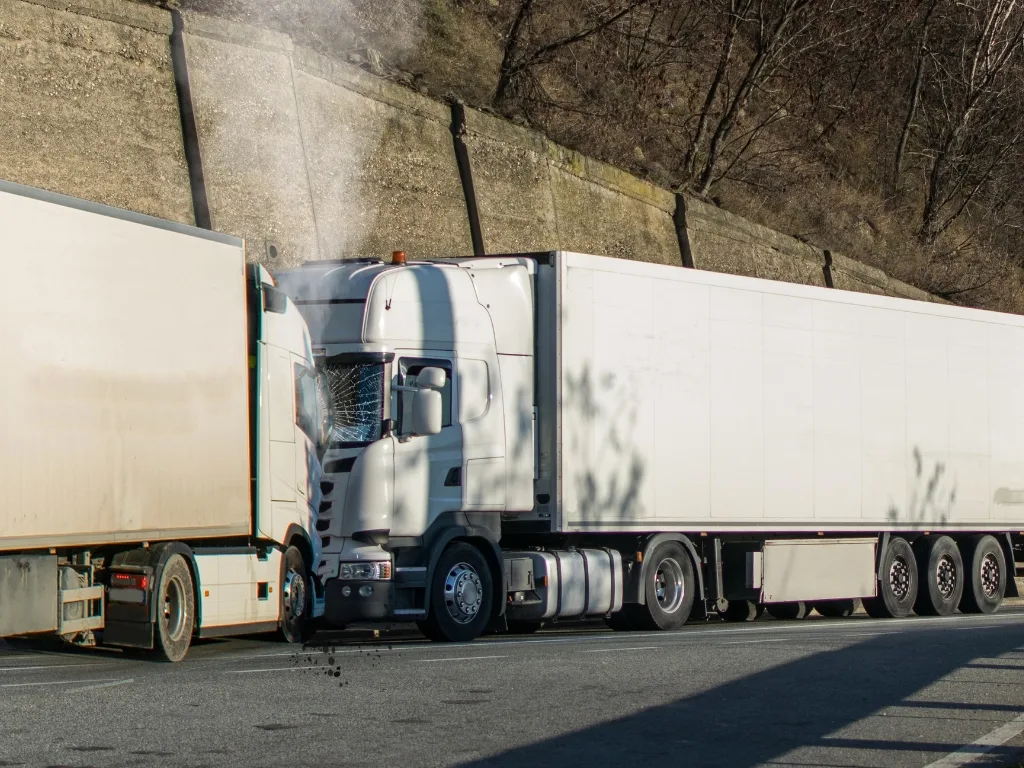
A commercial truck accident claim is not simply a larger version of a car accident claim. It involves a regulatory framework that does not apply to ordinary drivers, a roster of potentially liable parties that extends well beyond the person behind the wheel, and an evidence trail generated by federal compliance systems most car accident cases never touch. Understanding these differences from the outset shapes how a Fresno truck accident case is actually built.
The Law Office of Sam Salhab has represented injury clients throughout Fresno and the Central Valley for over fifteen years, including claims involving commercial carriers operating on the region’s freight corridors. A free consultation is available to evaluate your specific situation.
Why Truck Accident Claims Are Fundamentally Different
A Regulatory Framework That Doesn’t Exist in Car Accidents
Commercial carriers operate under extensive FMCSA regulations covering driver qualifications, hours of service, vehicle inspections, maintenance, and drug and alcohol testing. A violation of any of these can become direct evidence of negligence, something a standard two-passenger-vehicle collision never produces.
Corporate Defendants and Layered Insurance
Truck cases routinely involve corporate defendants, multiple insurance policies, and claims investigations run by specialized corporate teams rather than a single driver’s insurer. The California Department of Insurance notes that commercial claims often require navigating layered coverage structures with no equivalent in ordinary auto claims.
Who Can Be Held Liable
Most car accident cases involve a single at-fault driver. Truck accident cases routinely involve multiple potentially liable parties, each with distinct legal theories of responsibility.
| Potential Defendant | Basis for Liability |
| Truck driver | Direct negligence, fatigue, distraction, speeding |
| Motor carrier (trucking company) | Negligent hiring, supervision, or scheduling pressure |
| Truck owner | Separate from the carrier in leased equipment arrangements |
| Freight broker | Negligent carrier selection in some jurisdictions |
| Cargo loading company | Improperly secured or distributed cargo |
| Maintenance contractor | Negligent repair or inspection failures |
| Vehicle or parts manufacturer | Defective brakes, tires, or other components |
| Government entity | Road defects, in limited circumstances |
Identifying every liable party early matters because trucking companies often carry substantially higher policy limits than personal auto insurance, and multiple defendants can mean multiple available sources of recovery.
FMCSA Regulations That Become Evidence
Hours of Service and Driver Fatigue
Under 49 CFR Part 395, property-carrying truck drivers may drive a maximum of 11 hours after 10 consecutive hours off duty, cannot drive beyond the 14th consecutive hour after coming on duty, must take a 30-minute break after 8 consecutive hours of driving, and cannot drive after accumulating 60 hours on duty in 7 days or 70 hours in 8 days. Since December 2017, most commercial drivers must use an Electronic Logging Device (ELD) that automatically and tamper-resistantly records driving time by syncing with the truck’s engine.
A driver who violated these limits at the time of a crash has committed an FMCSA violation, admissible as evidence of negligence. Where a carrier’s dispatch practices or scheduling pressure encouraged the violation, the carrier’s own conduct can support an independent negligence claim, and in egregious cases, punitive damages.
Driver Qualification, Drug Testing, and Maintenance
Motor carriers must maintain driver qualification files documenting licensing, training, and safety history, and must conduct drug and alcohol testing under federal standards. Vehicles must meet inspection and maintenance schedules, and improperly secured cargo can independently cause or contribute to a crash. A failure in any of these areas, documented through the carrier’s own records, frequently becomes central evidence in truck accident litigation.
Evidence Unique to Truck Accident Cases
Commercial truck crashes generate a category of evidence that simply does not exist in standard passenger vehicle collisions:
- ELD data showing the driver’s actual hours and whether HOS limits were exceeded
- Driver qualification file documenting hiring practices and safety history
- Dispatch communications revealing scheduling pressure or known violations
- Bills of lading and cargo manifests establishing weight and load distribution
- Maintenance and inspection records showing whether known defects were addressed
- Engine control module (ECM) data recording speed, braking, and other parameters at the time of the crash
- GPS data establishing the truck’s location and movement history
- Dashcam footage, increasingly common on commercial fleets
Much of this evidence exists only in the carrier’s records and is not automatically preserved after a crash. This is why attorneys frequently send preservation letters immediately, formal requests that a carrier retain logs, ELD data, maintenance records, and internal communications before routine deletion or document destruction policies erase them.
Fresno’s Commercial Trucking Corridors
Fresno sits at the center of California’s agricultural and freight distribution economy, and its highways carry correspondingly heavy commercial traffic. Highway 99 functions as the primary north-south freight corridor, while Highway 41, Highway 180, and Highway 168 also see significant commercial volume tied to agricultural transport and regional logistics. Seasonal harvest traffic adds further density during peak growing periods.
Common Causes of Truck Accidents
FMCSA and NHTSA crash data identify driver fatigue from hours-of-service violations, distracted driving, speeding given the truck’s stopping distance requirements, brake and tire failures from inadequate maintenance, and improper cargo loading as leading contributing factors.
Jackknife crashes occur when a trailer swings out of control relative to the cab, often during sudden braking or evasive maneuvers. Underride collisions, where a smaller vehicle slides beneath a trailer, frequently produce catastrophic or fatal injuries. Blind spot crashes occur when a truck’s substantial no-visibility zones obscure a smaller vehicle during lane changes or turns.
Why Truck Accident Injuries Are Often Catastrophic
A loaded commercial truck can weigh twenty to thirty times more than a passenger car, and that weight differential translates directly into impact force and occupant compartment intrusion. NHTSA’s 2023 data shows 5,375 large trucks involved in fatal crashes nationally, with 71% heavy trucks and 55% in rural areas, a pattern consistent with Fresno County’s mix of rural highways and agricultural routes.
Longer stopping distances leave less margin to avoid a developing hazard, and multi-vehicle pileups are disproportionately common in truck-involved crashes. These factors increase likely injury severity and the future medical care that must be calculated into any damages claim.
Why Truck Accident Investigations Take Longer
Unlike a standard two-vehicle collision, a truck accident investigation requires reviewing driver logs and ELD data, obtaining and analyzing maintenance and inspection records, examining cargo loading documentation, and often coordinating with multiple insurance carriers representing different defendants.
The National Transportation Safety Board (NTSB) has investigated numerous commercial trucking incidents involving fatigue, maintenance failures, and cargo issues, and findings from these investigations frequently inform how attorneys analyze causation in similar cases. This additional layer of investigation takes meaningfully longer than a typical car accident claim, but it also frequently uncovers liability theories and additional defendants that would otherwise go unaddressed.
What Compensation Is Available
Truck accident victims can pursue the same categories of damages available in any personal injury claim, economic damages including medical expenses, future treatment, and lost earning capacity, supported where appropriate by Bureau of Labor Statistics wage data rather than estimation, along with non-economic damages for pain and suffering and diminished quality of life.
Given the catastrophic injury patterns common in truck crashes, future medical care and permanent disability calculations often represent a larger share of total damages than in standard car accident claims. Multiple liable parties and higher commercial policy limits can also mean a meaningfully larger pool of available compensation than a single personal auto policy would provide.
Talk to a Fresno Truck Accident Lawyer
Evidence in commercial trucking cases can be destroyed quickly through routine document retention policies unless a preservation letter is sent promptly. The Law Office of Sam Salhab offers free, confidential consultations with 24/7 availability for urgent situations, with no fee unless you recover.
Frequently Asked Questions
What makes truck accident claims different from car accident claims?
Truck accident claims involve federal safety regulations that create independent evidence of negligence, multiple potentially liable parties beyond the driver, layered commercial insurance policies, and evidence categories like ELD data and maintenance records that do not exist in standard passenger vehicle crashes. Investigations are correspondingly more involved and typically take longer to complete.
Who can be held liable after a commercial truck accident?
Liability can extend to the truck driver, the motor carrier, the truck’s owner if different from the carrier, a freight broker in some circumstances, the company responsible for loading cargo, a maintenance contractor, and the vehicle or parts manufacturer if a defect contributed to the crash. Identifying every liable party often expands the total compensation available.
Can the trucking company be responsible for the driver’s actions?
Yes, generally through respondeat superior, which holds an employer liable for an employee’s negligent acts within the scope of employment. The carrier can also face independent liability for negligent hiring, inadequate training, or scheduling practices that pressured a driver to violate hours-of-service limits.
What happens if a truck driver violated hours-of-service rules?
An hours-of-service violation is evidence of negligence in a civil case. ELD data is timestamped and tamper-resistant, making it difficult for a driver or carrier to dispute after the fact. Where a carrier knew or should have known its scheduling required violations, the violation can support a claim for punitive damages against the carrier itself.
How long do trucking companies keep electronic logging device records?
Federal regulations require carriers to retain certain supporting documents for limited periods, but retention practices vary, and routine deletion policies can erase relevant data within weeks or months of a crash. This is why attorneys send preservation letters immediately after being retained, formally requiring the carrier to retain ELD data, logs, and related records before they are lost.
Can improper cargo loading cause liability?
Yes. Cargo that is improperly secured, overweight, or unevenly distributed can cause a truck to become unstable, contribute to jackknife crashes, or shift during transport in ways that affect handling. Liability for improper loading can extend to the loading company, the carrier, or both, depending on who controlled the loading process.
Should I speak with the trucking company’s insurance adjuster?
Not without legal guidance. Commercial carriers and their insurers typically have dedicated claims teams and legal resources focused on minimizing payout, and any statement made before you understand the full scope of your injuries and the available evidence can be used to undermine your claim later.
When should I contact a Fresno truck accident lawyer?
As soon as possible after the crash. Commercial trucking evidence, including ELD data, dispatch records, and maintenance logs, can be lost to routine deletion policies within a short period, and a preservation letter sent early is often the only way to ensure this evidence survives long enough to be reviewed.