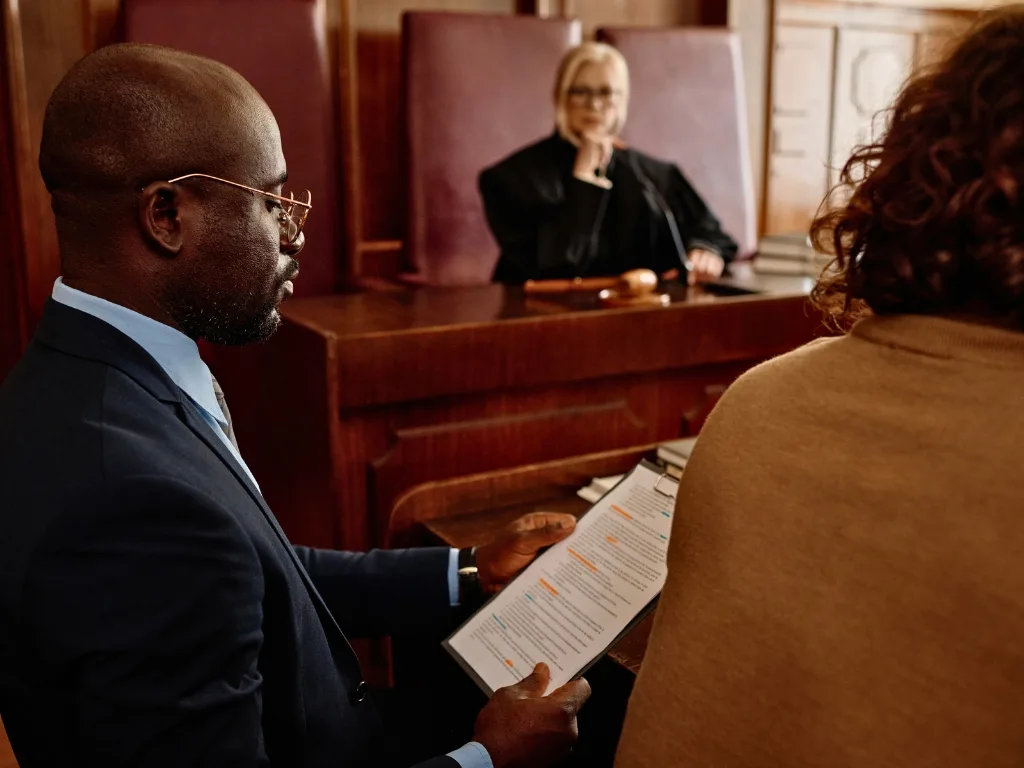
A California civil rights attorney represents individuals whose constitutional or statutory rights were violated by government officials, law enforcement agencies, or other actors wielding government authority. These cases — rooted in the federal Constitution, California’s own constitutional protections, and state civil rights statutes — pursue both accountability for the individual and, in many cases, structural reform of the institutions involved.
The Law Office of Sam Salhab has represented clients across California in criminal and civil rights matters where the conduct of law enforcement has raised serious constitutional questions. If your rights were violated by a government actor, understanding your legal options is the first step toward deciding whether to act.
What Counts as a Civil Rights Violation?
Civil rights violations occur when a government actor — or in some cases a private party — infringes on rights protected by the federal or California Constitution. The California Department of Justice’s Civil Rights Section enforces protections against a broad range of violations, including police misconduct, unlawful searches and seizures, excessive force, racial discrimination, housing discrimination, and government abuse of power.
The constitutional rights most frequently at issue in civil rights litigation are the First Amendment (free speech and assembly), the Fourth Amendment (protection from unreasonable searches and seizures), the Eighth Amendment (protection from cruel and unusual punishment), and the Fourteenth Amendment (equal protection and due process). Any government deprivation of these rights without legal justification can form the basis of a civil rights claim.
Civil Rights vs. Civil Liberties: A Meaningful Distinction
These terms are often used interchangeably, but they describe different legal concepts. Civil rights refer to protections from discrimination and unequal treatment — the right to be treated equally regardless of race, religion, gender, or other protected characteristics. Civil liberties refer to fundamental freedoms guaranteed against government interference — speech, religion, privacy, due process.
In practice, many civil rights cases involve both. A racially motivated arrest implicates both equal protection (civil rights) and Fourth Amendment freedom from unreasonable seizure (civil liberty). Understanding which framework applies shapes which statutes are available and what remedies can be pursued.
Federal Enforcement: Section 1983 Lawsuits
The primary federal vehicle for constitutional rights violations is 42 U.S.C. § 1983, which allows individuals to sue state and local government officials who deprive them of constitutional rights while acting under color of law. Section 1983 reaches police officers, sheriffs, corrections officers, public school officials, and municipal employees — anyone exercising government authority.
Cities and counties can also face liability under Monell v. Department of Social Services (1978) when an unconstitutional act results from official policy, a pervasive custom, or a failure to train officers. This is the framework for challenging not just individual misconduct but department-wide patterns of constitutional violations. The DOJ Civil Rights Division conducts parallel federal enforcement through pattern-or-practice investigations — but private § 1983 litigation and federal investigations are independent tracks that can proceed simultaneously.
California-Specific Civil Rights Laws
California provides additional protections that go beyond the federal floor — and in several areas, substantially beyond it.
The Tom Bane Civil Rights Act
California Civil Code § 52.1 — the Bane Act — prohibits any person from interfering with another’s constitutional or statutory rights through threats, intimidation, or coercion. Critically, the Bane Act does not require proof of discriminatory intent, and it does not require membership in a protected class. Anyone whose rights were interfered with through coercive government conduct can bring a claim.
As of 2022, the Bane Act was amended to remove prosecutorial immunity for peace officers and custodial officers — expanding its reach in false arrest and malicious prosecution cases.
The Unruh Civil Rights Act
California Civil Code § 51 prohibits discrimination by business establishments based on sex, race, color, religion, ancestry, national origin, disability, and other protected characteristics. Its application extends beyond employment into public accommodations, services, and access — creating a broader anti-discrimination framework than federal law alone.
Common Civil Rights Cases in California
Civil rights litigation in California covers a wide range of constitutional violations beyond the most visible police-misconduct cases.
Excessive force and police brutality claims are among the most common — brought under the Fourth Amendment and the Bane Act simultaneously. False arrest and wrongful detention claims arise when officers lack probable cause or reasonable suspicion for a stop, arrest, or extended detention. First Amendment retaliation claims address situations where government officials punish individuals for protected speech, association, or political activity. Unlawful search and seizure claims challenge warrantless intrusions, overbroad warrants, or consent obtained through coercion.
When Institutions Are the Target
Civil rights litigation is not limited to individual officers. Cases involving a department’s training failures, a municipality’s unconstitutional policies, or a correctional facility’s deliberate indifference to medical needs all fall within the civil rights framework. The California DOJ’s Civil Rights Section accepts complaints about law enforcement agencies and can initiate its own enforcement actions — a parallel track that creates an evidentiary record useful in private litigation.
Evidence That Strengthens a Civil Rights Claim
Strong civil rights cases are built on documented evidence, not recollection alone. The most valuable materials include body camera footage, dashcam recordings, witness statements, and any video recorded at the scene. Medical records documenting injuries from excessive force, internal complaints filed against the same officer or department, and RIPA stop data showing patterns of discriminatory enforcement all provide contextual support for claims that go beyond the individual incident.
Public records requests to law enforcement agencies can yield internal communications, use-of-force reports, and prior complaints — documentation that may reveal whether the conduct was isolated or part of a broader pattern. The window for preserving some of this evidence, particularly body camera footage, is short. Early legal engagement matters.
What Compensation May Be Available
Successful civil rights plaintiffs can recover compensatory damages for actual harm, including emotional distress, medical expenses, and lost income. Punitive damages are available against individual defendants who acted with malice or reckless indifference to constitutional rights. The Bane Act provides for statutory civil penalties in addition to compensatory damages. Under 42 U.S.C. § 1988, prevailing plaintiffs in § 1983 cases can recover attorney’s fees — a provision that makes civil rights litigation accessible even for clients without resources to fund it upfront.
Talk to a Civil Rights Attorney
Constitutional violations cause real, lasting harm — to individuals and to the communities affected by systemic misconduct. The legal tools to challenge that harm exist. What they require is prompt action and qualified counsel.
The Law Office of Sam Salhab offers free, confidential consultations for individuals across California whose encounters with government authority have raised serious constitutional questions. Preserve whatever evidence you have, document everything you remember, and schedule a consultation before the applicable limitations period runs out.
Frequently Asked Questions
What does a California civil rights attorney do?
A civil rights attorney represents individuals whose constitutional or statutory rights were violated by government actors — including police officers, government agencies, municipalities, and public officials. They investigate the facts, identify the applicable legal claims, file civil rights lawsuits under federal and state law, pursue discovery and depositions, and litigate for compensation and accountability on the client’s behalf.
What is the difference between a § 1983 lawsuit and a Bane Act claim?
A § 1983 lawsuit is a federal civil rights claim against government actors who violate constitutional rights under color of law. The Bane Act is California’s state-law counterpart — it covers interference with constitutional or statutory rights through threats, intimidation, or coercion. Unlike § 1983, the Bane Act does not require proof of discriminatory intent, is not subject to the federal qualified immunity defense, and provides additional statutory penalties. In police misconduct cases, both claims are often filed together.
Can I sue a city or county for a civil rights violation?
Yes, under the Monell doctrine, a municipality can be held liable under § 1983 when unconstitutional conduct results from an official policy, a widespread custom, or a failure to adequately train officers. The Bane Act extends liability directly to public entities that employ peace officers. Municipal liability requires showing a connection between the institutional failure and the specific constitutional harm — which is why pattern evidence and prior complaints are so important in these cases.
What evidence do I need to prove a civil rights violation?
The strongest civil rights cases combine firsthand evidence — body camera footage, dashcam recordings, witness statements, medical records — with broader institutional documentation such as prior complaints against the same officer, use-of-force reports, and stop data showing patterns of discriminatory enforcement. No single piece of evidence is usually sufficient alone. An attorney can help identify which public records to request and how to preserve evidence before it is overwritten or destroyed.
How long do I have to file a civil rights claim in California?
California applies a two-year personal injury statute of limitations to § 1983 claims from the date the violation occurred. Bane Act claims carry either a two- or three-year limitations period depending on the nature of the harm alleged. If a Government Claims Act filing is required before suing a public entity — generally within six months of the incident — failing to file on time can bar the lawsuit entirely. Early consultation with an attorney is essential to protect your ability to pursue a claim.
Can police officers raise qualified immunity against a Bane Act claim?
No. Qualified immunity is a federal doctrine that applies only to § 1983 claims. The Bane Act has no equivalent immunity defense, which is one reason California civil rights practitioners increasingly rely on it alongside or in lieu of federal claims. As the federal qualified immunity doctrine has been applied more broadly to shield officers from personal liability, the Bane Act has become a more significant tool for accountability in California courts.
When should I contact a civil rights attorney?
As soon as possible after the incident — ideally before any formal legal proceedings begin. Early engagement allows an attorney to identify and preserve evidence before it disappears, evaluate the applicable limitations periods, assess the strength of available claims under both federal and California law, and advise on whether a Government Claims Act filing is required. Waiting too long can foreclose options that would otherwise be available.