Refusing a chemical breath or blood test after a DUI arrest in California might seem like your right—but California’s implied consent law means the choice has serious, immediate consequences. You face not just criminal charges, but an automatic administrative license suspension that runs on a completely different timeline from your court case. Understanding what implied consent means and how it works is the difference between protecting yourself and losing your driving privileges before you ever set foot in a courtroom.
The Law Office of Sam Salhab represents Fresno-area clients facing both a DUI charge and the separate DMV consequences that follow a chemical test refusal. We know that time is everything in these cases—the DMV’s 10-day hearing request deadline is unforgiving—and having an attorney who understands both tracks can mean the difference between keeping your license and losing it for a year or more.
1. What Is California’s Implied Consent Law?
The Legal Basis
California Vehicle Code Section 23612 establishes that a person who drives a motor vehicle is deemed to have given consent to chemical testing of blood or breath for determining alcohol content, if lawfully arrested for a violation of the state’s DUI statutes. This consent isn’t something an officer asks for and a driver grants in the moment. It’s treated as having already been given the moment someone chose to drive on California roads.
The law creates a legal fiction: by getting behind the wheel, you’ve already said “yes” to a post-arrest chemical test. That’s what “implied” means. You didn’t sign anything. You didn’t hear the request. But the law says you consented by driving.
What Implied Consent Does and Doesn’t Cover
Implied consent applies only after a lawful arrest, not to the voluntary roadside screening test many officers use before deciding whether to make an arrest. This distinction matters enormously for your rights and potential penalties.
Before an arrest, implied consent doesn’t kick in. After an arrest, it does—and refusing becomes a violation with serious consequences on two separate fronts: criminal court and the DMV.
2. The Roadside Breath Test vs. the Post-Arrest Chemical Test
Are They the Same Thing?
No. California law creates a critical distinction that many people don’t understand.
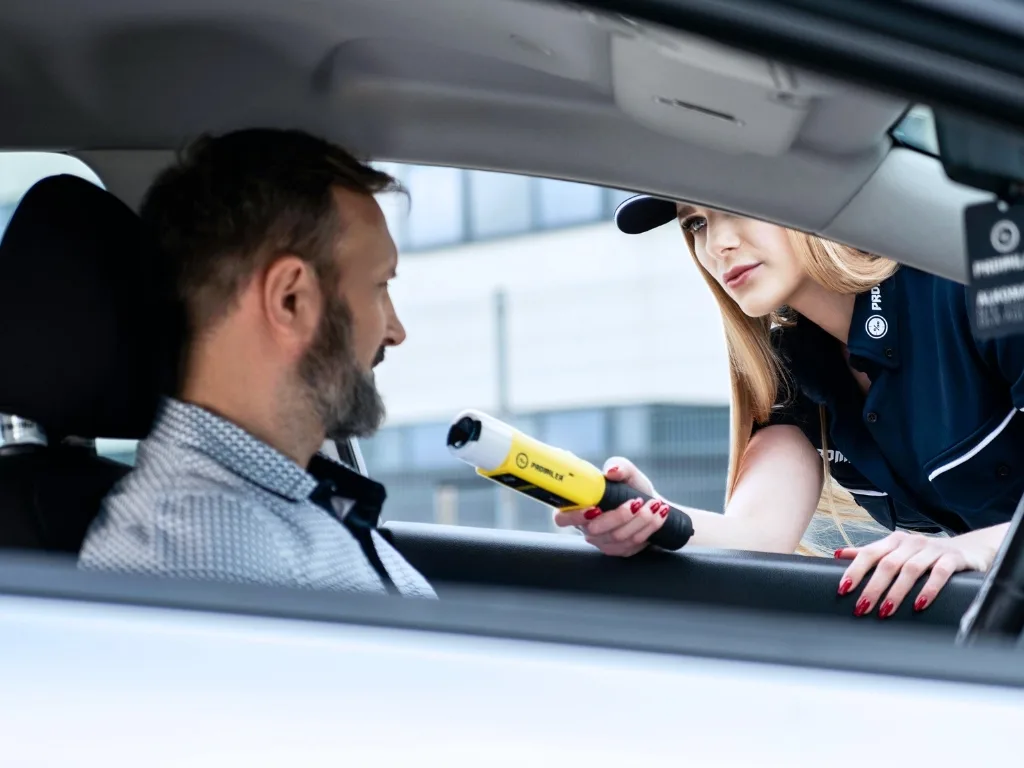
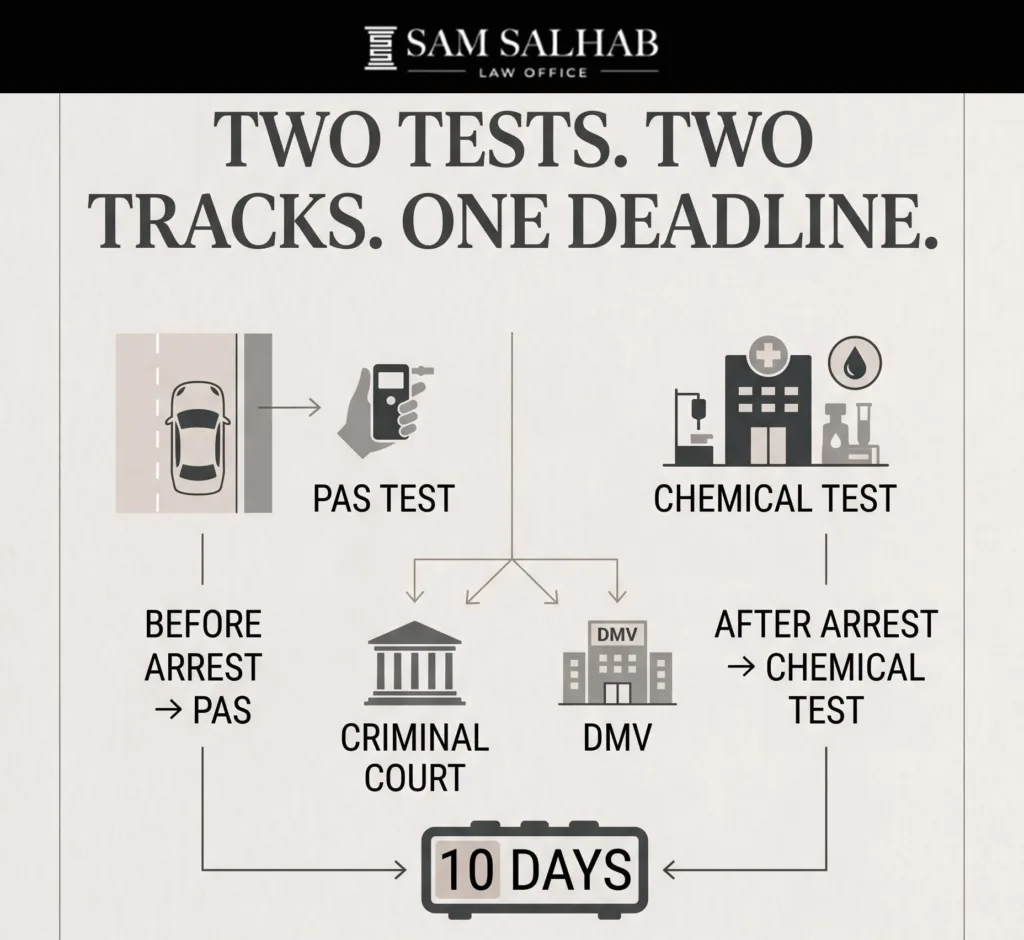
A preliminary alcohol screening (PAS) test—the portable breath test you might take at the roadside—is investigative. An officer may use it to help decide whether there’s reasonable cause to arrest you. California Vehicle Code Section 23612 explicitly says drivers have the right to refuse a PAS, and that refusing does not automatically trigger the refusal penalties that apply after arrest.
A post-arrest chemical test—the official breath or blood test at the station or hospital—is mandatory under implied consent. You generally have a choice between breath or blood (subject to circumstances that can require a specific test), but you cannot refuse without triggering serious consequences.
Why This Distinction Matters for Your Case
Refusing a roadside PAS is not the same as refusing the post-arrest chemical test. Completing a PAS does not satisfy your separate testing obligation after arrest. These are two separate legal requirements under state law.
Whether an arrest actually occurred, which test was requested, whether you completed it, and whether the officer provided required advisements are all details that can become central to challenging a DMV suspension or defending the underlying DUI charge. An experienced attorney will examine every detail of how and when you were arrested, what you were told, and what tests were actually requested.
3. The Two Separate Consequences of a Test Refusal
A chemical test refusal doesn’t just affect your criminal case. It triggers two parallel legal proceedings, each with its own timeline, rules, and stakes.
Criminal Court Consequences
If you’re convicted of DUI after refusing a chemical test, the refusal itself becomes evidence of guilt. The prosecution can argue that an innocent person would have submitted to the test, or use it to suggest consciousness of guilt.
Beyond that, the law imposes what’s called a “refusal enhancement”—additional mandatory penalties on top of a standard DUI conviction. These include:
- Enhanced jail time or longer probation
- Extended DUI education program requirements (longer and more expensive than standard programs)
- Increased fines and court costs
- The refusal stays on your record and can increase penalties if you’re convicted of another DUI in the future
For clients with prior DUI convictions or prior refusals, the penalties escalate further. A second refusal within ten years can result in felony charges.
DMV Administrative Consequences
The DMV runs a completely separate process from the criminal court system. It operates on its own schedule, with its own rules of evidence, and its own driver-safety hearing officers instead of judges and juries.
A chemical test refusal triggers a mandatory license suspension:
- First refusal: Minimum one-year suspension with no eligibility for a restricted license during that time
- Second refusal within ten years: Longer suspension or revocation
- The suspension is automatic if you miss the 10-day deadline to request a hearing
Here’s the critical part: The DMV can suspend your license even if the criminal DUI charge is later reduced or dismissed. These are entirely separate proceedings with separate evidentiary standards. You can lose the DMV hearing and win the criminal case (or vice versa). Each track must be fought independently.
4. The DMV Hearing Deadline You Cannot Miss
The DMV’s timeline is brutal and unforgiving. You have exactly 10 days from the date you receive notice of the suspension to request an administrative hearing. Missing this deadline results in an automatic, non-reviewable suspension without the chance to contest it.
Why the 10-Day Rule Is Critical
The DMV hearing is a civil administrative process, not a criminal trial. It uses a lower evidentiary standard (preponderance of the evidence, rather than beyond a reasonable doubt). A Driver Safety Hearing Officer—not a judge or jury—presides.
If you lose the DMV hearing, you lose your license. If you win, your driving privileges are protected while the criminal case proceeds.
Missing the 10-day deadline means losing that opportunity entirely. You cannot request a late hearing. You cannot ask a judge for an extension. The suspension becomes final.
At the Law Office of Sam Salhab, we understand how critical these deadlines are. In Fresno County Superior Court and across California, we move fast to meet the DMV’s 10-day requirement while also building a defense strategy for the underlying criminal charge. These decisions often need to happen within days of an arrest rather than weeks—which is why we offer 24/7 availability and handle jail interviews immediately.
What Counts as a Refusal
Refusal doesn’t require an explicit verbal “no.” Conduct that a hearing officer interprets as failing to complete the test in good faith can be treated as a refusal even without an outright refusal statement.
Examples include:
- Failing to produce an adequate breath sample after multiple attempts
- Behavior the officer interprets as non-cooperation
- Medical conditions that prevent a valid breath sample
- Confusion caused by unclear officer instructions
- Language barriers preventing understanding of the advisement
These factual circumstances—medical conditions, language barriers, officer confusion—can sometimes provide grounds to challenge a refusal finding. But these defenses require specific factual development and are rarely obvious at the time of arrest. An attorney who reviews the arrest circumstances thoroughly can identify opportunities that might otherwise be missed.
5. What Happens After a DUI Arrest for Refusal
Immediate Steps You Must Take
If you were arrested for DUI and refused, or believe you may have been found to have refused a chemical test, the clock on your DMV hearing request starts immediately. Contacting an attorney within the first few days, rather than waiting until closer to the 10-day deadline, gives your legal team time to:
- Review the arrest circumstances in detail
- Examine which test was requested and whether proper advisements were given
- Request the DMV hearing properly and on time
- Begin building a defense strategy for the criminal case
Why You Need Legal Representation From Day One
Once a lawful arrest occurs, an arrested person generally does not have the right to consult an attorney before deciding whether to comply with chemical testing. This means you made a crucial decision—to refuse or comply—without legal advice at the exact moment it mattered most.
That’s precisely why representation matters now. An experienced DUI defense attorney can examine whether the arrest was lawful, whether the officer provided required advisements, and whether the refusal itself was legally valid. These details can make the difference between a license suspension that stands and one that’s overturned.
6. Why Fresno Residents Choose the Law Office of Sam Salhab
Sam Salhab’s practice treats DUI defense with the same rigor whether the case centers on a chemical test result or a refusal, recognizing that a person facing this situation deserves representation that addresses both the criminal case and the parallel DMV proceeding. That dual-track approach is essential because a favorable outcome in one proceeding doesn’t automatically carry over to the other.
In Fresno County Superior Court and across California, Sam understands how prosecutors and judges approach DUI refusal cases. The DMV hearing process in particular is time-sensitive—the 10-day deadline is unforgiving—and having an attorney who knows Fresno’s court processes and DMV procedures means your rights are protected from the start.
The firm moves quickly to meet the DMV’s 10-day hearing request deadline while also building a strong defense strategy for the underlying criminal charge. These decisions often need to happen within days of an arrest rather than weeks. That’s why we offer free consultations, including jail interviews, and 24/7 availability for clients who have just been arrested.
Fresno-area and Central Valley residents can request a free, confidential consultation to understand their options on both the criminal and DMV sides of a DUI arrest. There is no obligation to retain the firm simply for an initial case review.
7. Common Defenses and Challenges to Refusal Cases
Unlawful Arrest
If the arrest itself was unlawful—if the officer lacked reasonable cause to believe you were driving under the influence—then everything that follows, including the refusal, may be challengeable.
Improper Advisements
California law requires officers to provide specific advisements before requesting a chemical test. The advisement must explain:
- The consequences of refusing
- The consequences of submitting
- The availability of independent chemical testing
If the officer failed to give proper advisements, or gave confusing or misleading advisements, that failure can invalidate a refusal finding.
Medical or Language Barriers
If you couldn’t provide a valid breath sample due to a medical condition, or couldn’t understand the officer’s instructions due to a language barrier, that may provide grounds to challenge a refusal finding.
Ambiguous Conduct
Sometimes what an officer interprets as refusal is actually confusion, medical distress, or inability to perform the test. An attorney can develop the specific facts to show the officer misinterpreted innocent conduct.
8. Why You Should Consult an Attorney
Navigating DUI refusal cases requires understanding both criminal and administrative law. The stakes are immediate—your license is at risk right now—and the timeline is unforgiving.
Protect Your Driving Privileges
An attorney can file your DMV hearing request on time, prepare you for the hearing, and present evidence and arguments to protect your license. Missing the 10-day deadline means losing your right to challenge the suspension entirely.
Build a Defense for the Criminal Case
While the DMV hearing is happening, an attorney can also investigate the arrest, review evidence, and build a defense strategy for the criminal DUI charges.
Understand Your Options
You have choices about how to proceed on both tracks—whether to request the DMV hearing, what strategy to take at that hearing, and how to approach the criminal case. An attorney can explain those options and help you make informed decisions.
If you’re facing a DUI arrest or a chemical test refusal in Fresno, reaching out right away helps ensure neither your DMV hearing deadline nor your criminal defense options are lost to time.
FAQs
1. What happens if I refuse a chemical test after a DUI arrest in California?
Refusing triggers a minimum one-year DMV license suspension with no restricted license eligibility, separate from any penalties in the criminal case. The refusal itself can also be used as evidence against you in the criminal proceeding, and it adds enhanced penalties if you’re convicted of DUI.
2. Can I refuse the roadside breath test without penalty?
Yes. The voluntary preliminary alcohol screening (PAS) test given before an arrest is legally distinct from the mandatory post-arrest chemical test. Declining the roadside test alone typically doesn’t trigger the same refusal penalties. However, once a lawful arrest occurs, the mandatory post-arrest test applies and refusing it does carry serious consequences.
3. If I already took the roadside PAS test, do I still have to take a chemical test after arrest?
Yes. Completing the pre-arrest PAS test does not satisfy the separate chemical-testing requirement that applies after a lawful arrest. California law treats these as two distinct obligations, so taking one does not excuse you from the other.
4. How long do I have to request a DMV hearing after a refusal or DUI arrest?
You generally have 10 days from receiving notice of the suspension to request an administrative hearing with the DMV. Missing this deadline typically results in an automatic suspension without the opportunity to contest it.
5. Can I still fight a DMV suspension if my criminal DUI case gets dismissed?
Yes. The DMV administrative process and the criminal court process are entirely separate. A dismissal in criminal court doesn’t automatically resolve a DMV suspension. Each proceeding must generally be addressed on its own, since they apply different evidentiary standards and procedures.
6. What if I couldn’t understand the officer’s instructions due to injury or a language barrier?
Confusion caused by factors outside your control may provide grounds to challenge a refusal finding. But this kind of defense depends heavily on the specific facts, including which test was requested and whether the required advisements were properly given. An attorney can help evaluate whether this challenge applies to your situation.
7. How much does it cost to consult an attorney about a DUI or test refusal?
Consultations are free. The firm offers flexible payment arrangements given how urgent these deadlines are for people who have just been arrested. Reaching out immediately after an arrest gives your attorney the most time to protect both your criminal case and your driving privileges.
Law Office of Sam Salhab: 2445 Capitol Street, Suite 140, Fresno, CA 93721 | Phone: (559) 412-9888 | Email: Sam@Salhablaw.com
Schedule Your Free Consultation — available 24/7
If you’re facing a DUI arrest or a chemical test refusal in Fresno, reaching out right away helps ensure neither your DMV hearing deadline nor your criminal defense options are lost to time. Contact the Law Office of Sam Salhab today.