A wet floor with no warning sign, a broken stair, or poor lighting in a parking lot can turn an ordinary errand into a serious injury in seconds. When that happens, the property owner or business responsible often counts on you being too overwhelmed or broke to fight back. They’re betting on your health insurance covering it, not them. At the Law Office of Sam Salhab, we represent Fresno residents working to hold negligent property owners accountable when a hazard they should have fixed causes real harm. We’ve taken on Walmart, Costco, Target, and other major corporations—and we’ve recovered millions for injured clients. We don’t back down.
Premises liability claims can be harder to win than people expect, since simply falling on someone’s property doesn’t automatically mean the owner is at fault. Fresno claimants benefit from an attorney who knows how to document a hazardous condition, establish how long it existed, and connect that evidence to the specific legal duty a property owner owes under California law.
1. How Common Are Slip and Fall Injuries?
The Scale of the Problem for Older Adults
Falls are a leading cause of injury nationwide, and the toll is especially heavy among older adults. Falls are the leading cause of injury-related death among adults ages 65 and older, with the age-adjusted fall death rate rising 21% from 64.7 per 100,000 older adults in 2018 to 78.4 per 100,000 in 2024. Over 14 million adults ages 65 and older—about one in four—report falling each year, and roughly 37% of those who fall report an injury requiring medical treatment or causing at least a day of restricted activity, adding up to an estimated nine million fall injuries annually.
Why This Matters for Premises Cases
Not every fall happens because of icy sidewalks or worn carpeting, but a meaningful share occur on commercial or residential property where a hazard went unaddressed. Unintentional falls accounted for more than 90% of selected emergency department visits and hospitalizations among older adults in a 2018 federal healthcare dataset. That volume translates directly into Fresno grocery stores, apartment complexes, and public sidewalks, where a single unaddressed spill or broken step can lead to a serious injury claim.
2. Common Types of Premises Liability Claims
Fresno slip and fall cases arise from a range of settings, but certain hazard categories appear again and again in claims against property owners and businesses.
Hazardous Conditions Inside a Property
Common indoor hazards include wet or recently mopped floors without warning signs, uneven flooring or torn carpet, poor lighting in stairwells or hallways, and cluttered aisles or walkways in retail settings. Each one creates a legal question: Did the property owner know, or should they have known, about the danger? And did they take reasonable steps to fix it or warn visitors?
Hazardous Conditions Outside a Property
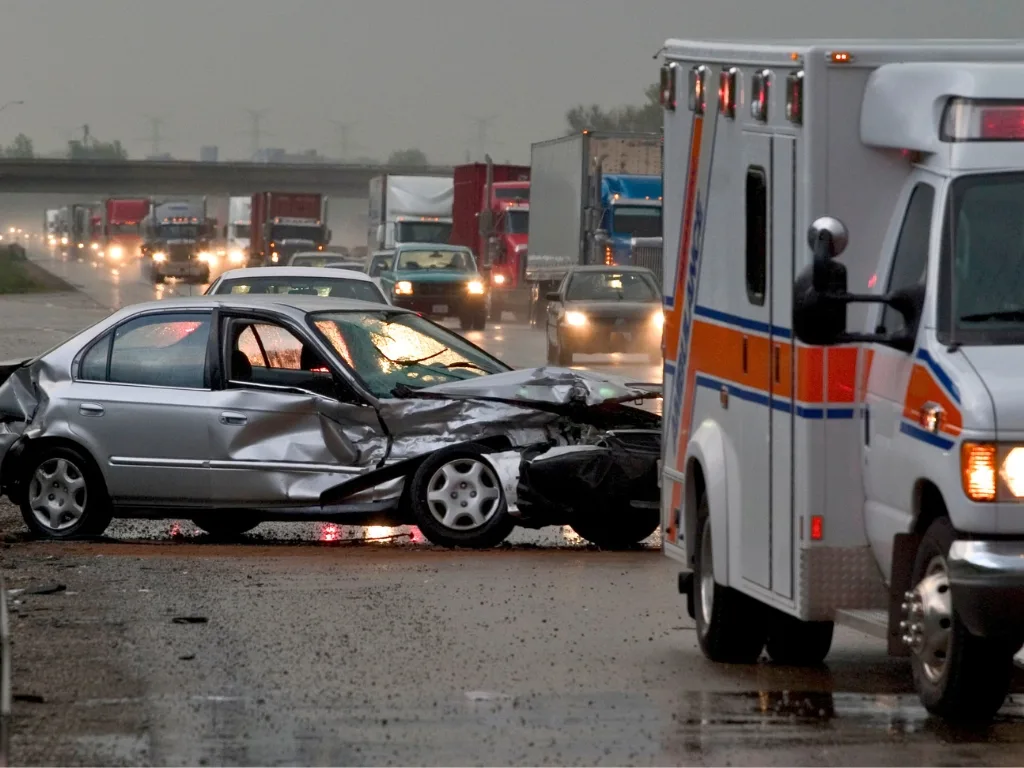
Outside, property owners face similar liability for cracked or uneven sidewalks and parking lots, missing or broken handrails on stairs and ramps, inadequate lighting in parking structures, and snow, ice, or standing water left unaddressed. Local hazards in Fresno and the Central Valley—particularly seasonal rain and flooding on Highway 99 and surrounding commercial properties—make outdoor maintenance a critical issue.
3. What California Law Requires of Property Owners
California premises liability claims are grounded in a broad negligence principle established in Civil Code Section 1714, which states that a property owner owes a duty of ordinary care to keep their premises reasonably safe. The elements of a negligence claim and a premises liability claim are the same: a legal duty of care, breach of that duty, and proximate cause resulting in injury. This standard traces back to the landmark case Rowland v. Christian, which eliminated the old distinctions between trespassers, licensees, and invitees in favor of a single reasonableness test.
Because the duty applies broadly, the harder question in most cases isn’t whether a duty existed but whether the property owner knew, or reasonably should have known, about the specific hazard in time to fix it or warn visitors. Evidence showing how long a spill sat unattended, how many prior complaints a landlord ignored, or whether routine inspections were skipped often becomes the deciding factor in these cases.
4. How Do You Prove a Property Owner Was Responsible for Your Fall?
Falling on someone else’s property does not automatically establish liability. A premises liability claim generally requires evidence that the defendant owned, leased, occupied, or controlled the property, was negligent in its use or maintenance, and that the negligence was a substantial factor in causing the injury.
The Evidence Usually Begins with the Hazard
Photos or video can show what caused the fall and whether the condition created an unreasonable risk under the circumstances. The next question is whether the property owner or occupier knew, or reasonably should have known, about it, which can involve actual notice (such as a prior complaint or employee report) or constructive notice when a reasonable inspection should have revealed the condition. California’s Judicial Council civil jury instructions specifically recognize constructive notice as an issue in premises liability cases.
What the Investigation Looks For
The investigation should then examine what the responsible party did, or failed to do, after the hazard could reasonably have been discovered. Maintenance records, inspection logs, work orders, surveillance footage, incident reports, and witness statements can help show whether the owner should have repaired the condition, protected visitors from it, or provided an adequate warning. The applicable standard focuses on reasonable care rather than requiring property owners to guarantee that no one will ever be injured.
Connecting the Condition to Your Injury
Finally, medical records and other evidence must connect the condition to the injury. A fall alone is not enough; the evidence must support that the property’s condition and the defendant’s negligence substantially contributed to the harm.
5. Why Fresno Residents Choose the Law Office of Sam Salhab
Sam Salhab’s practice treats every injured client as a person navigating a disruption to their life, not a routine claim number. That approach shapes how the firm builds premises liability cases, starting with a prompt investigation to preserve evidence like surveillance footage, incident reports, and maintenance logs before they disappear.
The firm coordinates with safety experts when needed to establish how long a hazard existed and whether the property owner’s inspection practices met a reasonable standard. The Law Office of Sam Salhab has successfully fought and recovered for clients against Walmart, Costco, Target, and other major corporations. We don’t accept the property owner’s insurance company version of the story—we dig into the evidence, challenge the narrative, and fight hard for what our clients deserve.
Flexible payment arrangements and a contingency fee model mean clients aren’t asked to pay upfront while they’re already managing medical bills and lost income from the injury. That’s how we operate: you pay nothing unless we recover money for you.
6. Getting Started With Your Claim
Evidence in a slip and fall case can disappear quickly. A wet floor gets mopped up, a broken step gets repaired, and surveillance footage often gets overwritten within days unless someone requests it be preserved. Photographing the hazard, obtaining contact information for witnesses, and reporting the incident to the property manager or business before leaving the scene all strengthen a claim considerably.
Fresno-area clients can request a free consultation to have their case reviewed, including situations where the hazard has already been fixed or removed. There is no fee upfront, and you owe attorney fees only if the case results in a settlement or verdict. Litigation costs are paid from the recovery, not from your own pocket. If there is no recovery, you owe nothing—no fees, no costs. That structure lets you pursue full compensation without financial pressure while you’re already managing medical expenses and lost income.
Law Office of Sam Salhab: 2445 Capitol Street, Suite 140, Fresno, CA 93721
Phone: (559) 412-9888
Email: Sam@Salhablaw.com
Schedule Your Free Consultation — available 24/7.
FAQs
1. Do I have a case if I fell but the hazard was fixed before I called an attorney?
Yes, a case can still move forward without the hazard itself, as long as there’s supporting evidence such as photos, witness statements, incident reports, or maintenance records. It’s why documenting the scene immediately after a fall matters more than most people realize.
2. How long do I have to file a slip and fall claim in California?
California’s personal injury statute of limitations generally gives an injured person two years from the date of the fall to file a lawsuit. Claims against a government entity, such as a fall on a public sidewalk, require a formal claim within six months, so early legal review is important.
3. What if I was partly at fault for the fall, like not watching where I was walking?
California follows a pure comparative negligence rule, meaning a person found partially at fault can still recover damages, reduced by their percentage of responsibility. Shared fault does not automatically bar a claim from moving forward.
4. How do I prove the property owner knew about the hazard?
Evidence such as prior complaints, maintenance records, inspection logs, or how long the hazard was visibly present can establish actual or constructive notice, meaning the owner knew or reasonably should have known about the danger. Surveillance footage showing the timeline between when a hazard appeared and when the fall occurred is often the strongest evidence available.
5. Can I sue a landlord if I fell in a common area of my apartment complex?
Yes, landlords generally owe the same duty of reasonable care for common areas like stairwells, parking lots, and walkways that they control. A pattern of ignored maintenance requests or unresolved complaints about the same hazard can significantly strengthen this type of claim.