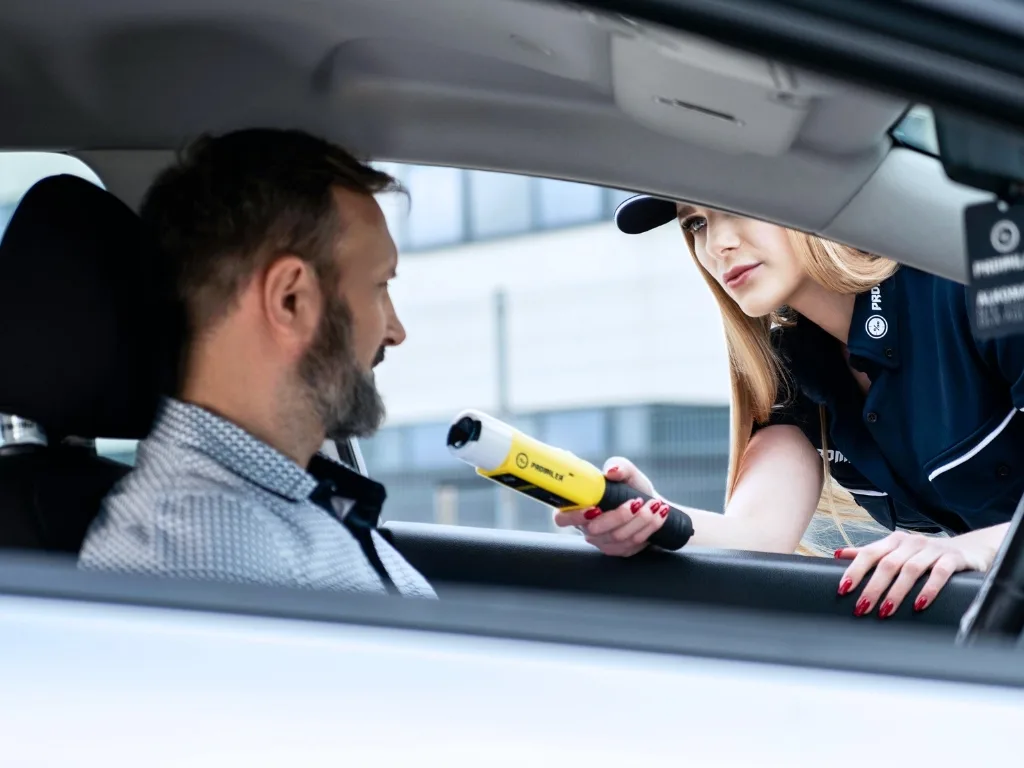
Most DUI arrests in California are filed as misdemeanors. Under four specific statutory conditions, however, that charge converts to a felony — and the consequences change completely. County jail becomes state prison. Fines reach tens of thousands of dollars. A permanent felony record follows. And the legal process itself grows considerably more complex, with DMV proceedings running parallel to criminal court on an independent timeline.
Knowing which charges apply, the sentencing range, and what happens at each stage helps in making informed decisions. The Law Office of Sam Salhab, a Fresno-based criminal defense firm founded in 2010, has handled DUI cases across California, including felony DUI matters involving injury and repeat offenses, as well as serious escalation cases.
1. When a DUI Becomes a Felony in California
California does not leave the felony question open to general prosecutorial discretion in most cases. Four specific legal conditions each independently trigger a felony filing, and understanding which one applies determines everything from the charges you face, the defense strategy that makes sense, and how the case will proceed. Here are the statutory triggers:
Fourth DUI within 10 years
Under Vehicle Code § 23550, a fourth DUI arrest within a 10-year lookback period is automatically charged as a felony. That window runs from arrest date to arrest date — not conviction date — and prior wet reckless pleas (Vehicle Code § 23103.5) count toward the total. Out-of-state DUI convictions substantially similar to California law may also count.
DUI with injury
Under Vehicle Code § 23153, driving under the influence and causing bodily injury to any person other than the driver is a criminal offense. This is a wobbler — prosecutors can file it as either a felony or a misdemeanor depending on injury severity, the defendant’s prior record, and other factors. Felony filing is standard when injury is significant.
DUI causing death
A DUI resulting in a fatality can be charged as gross vehicular manslaughter while intoxicated under Penal Code § 191.5, carrying up to 10 years in state prison. Where the driver held a prior DUI conviction with a Watson advisement on record, prosecutors can escalate to second-degree murder under Penal Code § 187.
Prior felony DUI conviction
Under Vehicle Code § 23550.5, any new DUI arrest after a prior felony DUI conviction is automatically charged as a felony — regardless of how much time has passed since that prior conviction.
2. Felony DUI Sentencing Ranges — and What Actually Moves the Number
Statutory sentencing ranges for felony DUI in California are deliberately wide, and the distance between minimum and maximum depends on factors courts weigh with real discretion. Published ranges tell you the outer limits; what judges actually impose is shaped by the specifics of the case.
What Courts Weigh at Sentencing
For a fourth-offense felony DUI, Vehicle Code § 23550 sets a sentencing range of 16 months, 2 years, or 3 years in state prison, plus fines reaching $18,000 and a mandatory habitual traffic offender designation. For DUI with injury, the base range is 16 months to 4 years — with one to six additional years per seriously injured victim under Penal Code § 12022.7.
Judges weigh injury severity, the completeness and recency of prior record, BAC level at arrest, whether the driver fled the scene, and probation eligibility when selecting within those ranges. Two defendants charged under identical statutes can receive sentences years apart based on these factors alone — which is why statutory maximums are a poor indicator of what a sentence will actually look like after defense advocacy.
3. Enhancements Are Not the Same as a Felony Charge
A persistent source of confusion in felony DUI cases is treating enhancements as equivalent to the felony charge itself. They operate at different levels of the case. The felony is the charge classification. An enhancement is a sentencing add-on that increases prison time beyond the base sentence, applied after a conviction is established.
How Enhancements Stack in Practice
A high BAC (0.15% or above), child passenger, excessive speed, and multiple injured victims are each separate DUI enhancements in California. In felony cases, they can be imposed consecutively, increasing total exposure beyond the base charge. When combined with prior convictions, these factors can significantly raise the potential sentence.
Identifying which enhancements apply — and, more importantly, which ones can be challenged or negotiated — is one of the first things an experienced defense attorney does when reviewing a felony DUI case.
4. Two Separate Battles: DMV Action vs. Criminal Court
One of the most misunderstood aspects of any DUI arrest is that the California DMV administrative process and the criminal court case are entirely independent. The court does not handle your license. The DMV does, on its own timeline, using its own standard of proof.
After a felony DUI arrest, you have 10 days to request a DMV Administrative Per Se (APS) hearing, or your license will be automatically suspended without a chance to contest it. A criminal acquittal does not reverse a DMV suspension if it isn’t separately challenged. In fourth-offense felony DUI cases, the DMV penalty can be a four-year revocation, making the 10-day deadline especially critical.
Don’t let this 10-day window pass. Contact the Law Office of Sam Salhab immediately if you’ve been arrested for DUI. We handle the DMV action and criminal defense simultaneously, protecting your driving rights and freedom.
5. The Timeline of a Felony DUI Case in California
Felony DUI cases move through a defined procedural sequence, and each stage carries strategic weight. Understanding the process removes a significant source of anxiety for defendants and families.
Arrest and booking trigger both the criminal case and DMV process. In-custody arraignment occurs within 48 hours, followed by a preliminary hearing where probable cause is reviewed and defense challenges may be raised. Plea negotiations and motions usually proceed at the same time, and most felony DUI cases resolve through plea deals. If not, the case goes to trial, where guilt must be proven beyond a reasonable doubt, followed by sentencing if there is a conviction.
6. The Watson Doctrine: When a DUI Escalates to Murder
California’s Watson doctrine represents the most severe escalation available in DUI law, and it applies specifically to repeat offenders. Under the doctrine established in People v. Watson (1981), a driver who previously received a Watson advice — a standard warning that future DUI causing death may be charged as murder — can face second-degree murder charges if a subsequent DUI results in a fatality.
Second-degree Watson murder carries a sentence of 15 years to life in state prison. The implied malice element — the legal argument that the defendant knew their conduct was dangerous to human life and proceeded regardless — is supplied by the prior advice. Watson advice is now standard in virtually all California DUI plea proceedings, which means the escalation pathway exists for nearly any repeat offender involved in a fatal DUI.
7. Why You Should Consult an Attorney
Felony DUI cases move fast, and the decisions made at arraignment, at the DMV hearing, and during pretrial motions have consequences that extend far beyond the courtroom. The Fresno DUI attorneys at the Law Office of Sam Salhab are available around the clock for a free, confidential case evaluation — by phone, in person, or at the jail. The firm serves clients throughout California and files expungements within 48 hours of engagement.
The firm has handled thousands of DUI matters over nearly 20 years of practice, including serious felony cases. We are ready to fight for you with everything we have, within the bounds of the law. Sam has been recognized as a Super Lawyers Rising Star three consecutive years and named to The National Trial Lawyers Top 40 Under 40. The firm offers flexible payment plans, student and military discounts, and the kind of personalized attention that treats every client as a person — not a file number.
Speak with a Fresno Felony DUI Attorney Before Your Next Court Date
Felony DUI cases move fast. Contact us today for a free consultation and get a lawyer on your side immediately. We’re available 24/7 by phone, in person, or at the jail.
FAQs
1. What prior offenses count toward the 10-year lookback for a felony DUI?
The 10-year lookback period includes prior DUI convictions, wet reckless pleas under Vehicle Code § 23103.5, and out-of-state convictions that are substantially similar to California DUIs. It is calculated from arrest date to arrest date, and precise timing matters — even small date differences can determine whether a prior conviction counts toward a fourth-offense DUI charge.
2. Can a felony DUI charge be reduced to a misdemeanor?
DUI with injury under Vehicle Code § 23153 is a “wobbler,” meaning it can be charged as either a felony or misdemeanor at the prosecutor’s discretion. In some cases, it may be reduced to a misdemeanor depending on injury severity and prior record. However, fourth-offense DUIs and Watson murder charges are not wobblers and cannot be reduced in the same way.
3. Does a felony DUI conviction affect the right to own a firearm?
Yes. A felony DUI conviction permanently prohibits the convicted person from owning, possessing, or purchasing firearms under both California Penal Code § 29800 and federal law (18 U.S.C. § 922(g)(1)). This prohibition applies for life and is one of the most significant collateral consequences of a felony conviction beyond the sentence itself — it cannot be removed by expungement alone.
4. What happens if I miss the 10-day DMV deadline after a felony DUI arrest?
Missing the 10-day deadline to request a DMV Administrative Per Se hearing results in an automatic license suspension or revocation with no opportunity for administrative challenge. There is no grace period or late filing option. After that point, the only remaining option is a limited and more difficult formal review process. Acting within the 10-day window is critical in DUI cases.
5. Is probation possible in a felony DUI case, and what does it involve?
Formal probation may be available in some felony DUI cases, especially first-time filings involving injury and limited prior history. It typically includes a DUI program, ignition interlock device, restitution, and 3–5 years of supervision. Violating any condition can lead to probation being revoked and the original prison sentence being imposed.
6. How does Watson murder differ from vehicular manslaughter in a DUI death case?
Gross vehicular manslaughter while intoxicated under Penal Code § 191.5 is based on gross negligence and carries up to 10 years in state prison. Watson murder under Penal Code § 187 requires proof of implied malice, meaning the defendant knew the conduct was dangerous to human life and acted anyway, often based on a prior warning. Watson murder carries 15 years to life, and the key distinction is the level of awareness the prosecution can prove.
Law Office of Sam Salhab: 2445 Capitol Street, Suite 140, Fresno, CA 93721
Phone: (559) 412-9888 | Email: Sam@Salhablaw.com
Schedule Your Free Consultation — available 24/7