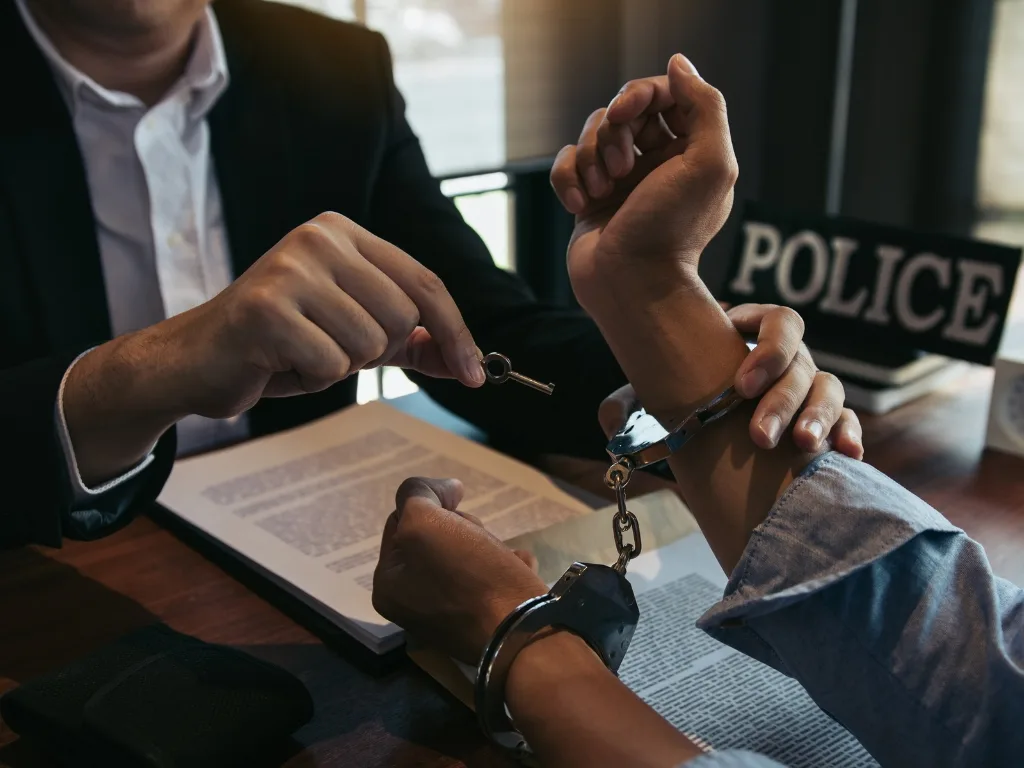
Being abused by a partner or family member is terrifying enough on its own. When your immigration status is also at risk, the weight of that situation can feel impossible — and abusers know it, often using deportation threats as a deliberate tool of control. What many survivors don’t realize is that federal law has built specific legal protections precisely for this scenario, and those protections are far more substantial than most people assume.
At the Law Office of Sam Salhab, we represent clients across California who are navigating domestic violence charges and immigration consequences at the same time. Attorney Sam Salhab has represented thousands of clients since 2010, offering the kind of personalized, aggressive representation that complex situations demand. If you or someone you love is facing both domestic violence and deportation risk, understanding your legal options is the first and most important step.
Legal Protections That Can Stop a Deportation Order
Federal law provides three distinct immigration relief pathways for domestic violence survivors, and choosing the right one depends on your specific circumstances. They are not interchangeable — each carries different eligibility requirements, evidentiary standards, and processing timelines.
VAWA Self-Petition: Acting Without Your Abuser’s Knowledge
The Violence Against Women Act (VAWA) allows survivors married to U.S. citizens or lawful permanent residents to self-petition for immigration status without the abuser’s involvement or notification.
According to USCIS, eligibility requires proof of a qualifying relationship, shared residence at some point, good moral character, and that the abuse constituted “battery or extreme cruelty.” Critically, USCIS explicitly recognizes psychological abuse, coercion, and sustained intimidation as forms of extreme cruelty — physical harm is not required to qualify.
U Visa: Legal Protection Tied to Law Enforcement Cooperation
The U nonimmigrant visa was created specifically to encourage crime victims — including domestic violence survivors — to cooperate with law enforcement without fearing deportation. As analyzed by the Congressional Research Service, the program was designed to resolve the conflict between immigration enforcement and the public safety interest in having serious crimes reported.
To qualify, survivors must obtain a law enforcement certification confirming their cooperation — a procedural step that distinguishes U visa cases from VAWA petitions and affects both timeline and documentation strategy.
Cancellation of Removal: Relief Even After Proceedings Begin
If removal proceedings have already been initiated, survivors may qualify for cancellation of removal under VAWA provisions before an immigration judge. This pathway shifts jurisdiction from USCIS to the immigration court and carries a higher evidentiary burden — but it can still result in lawful permanent resident status even when a deportation order has already been set in motion.
Understanding whether defensive relief in court or affirmative relief through USCIS is the right strategy requires experienced legal counsel.
What USCIS Actually Requires to Approve Your Case
USCIS uses a pattern-based evaluation framework — not a single-incident threshold. A survivor does not need a police report or hospital records to qualify, but they do need documentation establishing a consistent, corroborated pattern of abusive behavior over time. Evidence types recognized by USCIS include personal declarations, restraining orders, medical records, photographs, clergy or counselor statements, and shelter intake documentation.
The cohabitation requirement is one of the most common application failure points. USCIS requires proof that the petitioner and abuser shared a residence at some point during the qualifying relationship — lease agreements, utility bills, or shared mail at the same address can satisfy this. Applicants who file without anticipating this requirement face avoidable delays that can stretch an already lengthy process even further.
Can ICE Still Deport You While Your Application Is Pending?
This is one of the most frequently misrepresented points in online legal content, and the honest answer is yes. Filing a VAWA petition or U visa application does not create an automatic legal barrier against ICE enforcement. ICE operates under a prosecutorial discretion framework — agents have authority to deprioritize cases involving crime victims, but that discretion is not guaranteed and shifts with federal enforcement priorities.
The practical implication is that passive filing is not enough. An attorney can proactively communicate your pending status to enforcement agencies, document your cooperation with victim services, and take steps that a filed application alone cannot accomplish. Real-world protection during the window between filing and approval is a legal strategy problem — not just a paperwork one.
Rights You Have Regardless of Immigration Status
A point most legal content on this topic misses entirely: federal law guarantees access to critical protections for domestic violence survivors regardless of immigration status. Under HHS domestic violence services guidance, federally funded shelters cannot deny services based on immigration status, and emergency medical care is similarly protected. You do not need to wait for your immigration case to resolve to access safe housing, healthcare, or victim advocacy.
Victim service providers — shelters, hotlines, and counselors — are not immigration enforcement agencies and are not required to report your status to DHS. In California, most operate under explicit confidentiality policies, meaning accessing these services creates no immigration record that can be used against you. In VAWA cases, documentation from shelters or counselors can actually strengthen your evidentiary file with USCIS.
Why These Protections Exist — and Why They’re Substantial
Understanding the legislative intent behind these programs clarifies that they are not loopholes — they are deliberate federal policy choices that have survived multiple congressional reauthorizations. As documented by the Congressional Research Service, Congress identified a measurable public safety problem: immigrant victims were underreporting domestic violence at high rates due to deportation fear, which made abusers harder to prosecute and communities less safe.
The government’s interest in immigration enforcement and its interest in prosecuting domestic violence offenders came into direct conflict — and Congress resolved that conflict by creating protected legal space for survivors. These programs exist because allowing abusers to use immigration status as a weapon is a documented threat to public safety, not just to individual well-being.
The Law Office of Sam Salhab Is Ready to Help
Facing domestic violence and deportation risk at the same time is one of the most difficult legal situations a person can be in — and it is not one you should navigate without experienced representation. The Law Office of Sam Salhab offers free, confidential consultations to individuals across California, with offices in Fresno and Orange County and 24/7 availability for emergency situations.
Attorney Salhab has been recognized by Super Lawyers Magazine (2014–2016) and The National Trial Lawyers’ Top 40 Under 40, and has built his firm around the belief that every client deserves to be treated as a person — not a case number.
Reach out today for a free case evaluation:
- Fresno Office: 2445 Capitol Street, Suite 140, Fresno, CA 93721 — (559) 412-9888
- Orange County Office: 17901 Von Karman Ave #665, Irvine, CA 92614 — (949) 910-3472
- Email: Sam@Salhablaw.com
- Online: Request a free consultation here
FAQs
Does VAWA protection apply if I am undocumented, not just on a visa?
Undocumented survivors who are or were married to U.S. citizens or lawful permanent residents can file VAWA self-petitions. Current immigration status at the time of filing does not automatically disqualify a petitioner — eligibility is driven by the qualifying relationship to the abuser, not by whether the survivor holds valid documentation.
Can men file for VAWA protection?
Yes. Despite its name, VAWA protections apply to all genders. Male survivors who were married to or in a qualifying relationship with a U.S. citizen or lawful permanent resident can self-petition using the same eligibility criteria and process as any other petitioner.
What happens to my children’s immigration status while my case is pending?
In many cases, children under 21 can be listed as derivative beneficiaries on a VAWA petition or U visa application, allowing them to pursue status alongside the primary petitioner. Derivative coverage is not automatic — it requires specific steps during the filing process, and eligibility depends on the child’s age and relationship to the petitioner.
Can I still file if I have already left the abusive relationship?
Yes. VAWA allows survivors who have already left the relationship to petition, provided they can still document the qualifying relationship and pattern of abuse. The evidentiary challenge is greater without access to current documentation, which is why preserving records — texts, emails, photos — before leaving is strategically important.
Does reporting domestic violence to police trigger an immigration inquiry against me?
Not in California. Most California jurisdictions operate under sanctuary or trust policies that limit cooperation between local law enforcement and federal immigration authorities regarding crime victims. Reporting as a victim does not automatically initiate an immigration inquiry against the reporting party.
How long does a U visa application realistically take?
Congress caps annual U visa grants at 10,000 per fiscal year, and demand consistently exceeds that cap. Approved petitioners are placed on a waiting list for actual visa issuance, which can extend the total timeline to several years beyond initial filing. Applicants on the waiting list may be eligible for deferred action and work authorization in the interim, though these benefits are not guaranteed.
Does a prior criminal record prevent me from qualifying?
Not necessarily, but it is a factor USCIS evaluates. VAWA requires a showing of good moral character, and criminal history is part of that assessment — minor offenses may not be disqualifying, while certain convictions can affect eligibility. An attorney with experience in both immigration and criminal defense — like the team at the Law Office of Sam Salhab — can assess how your specific record interacts with relief eligibility before you file.