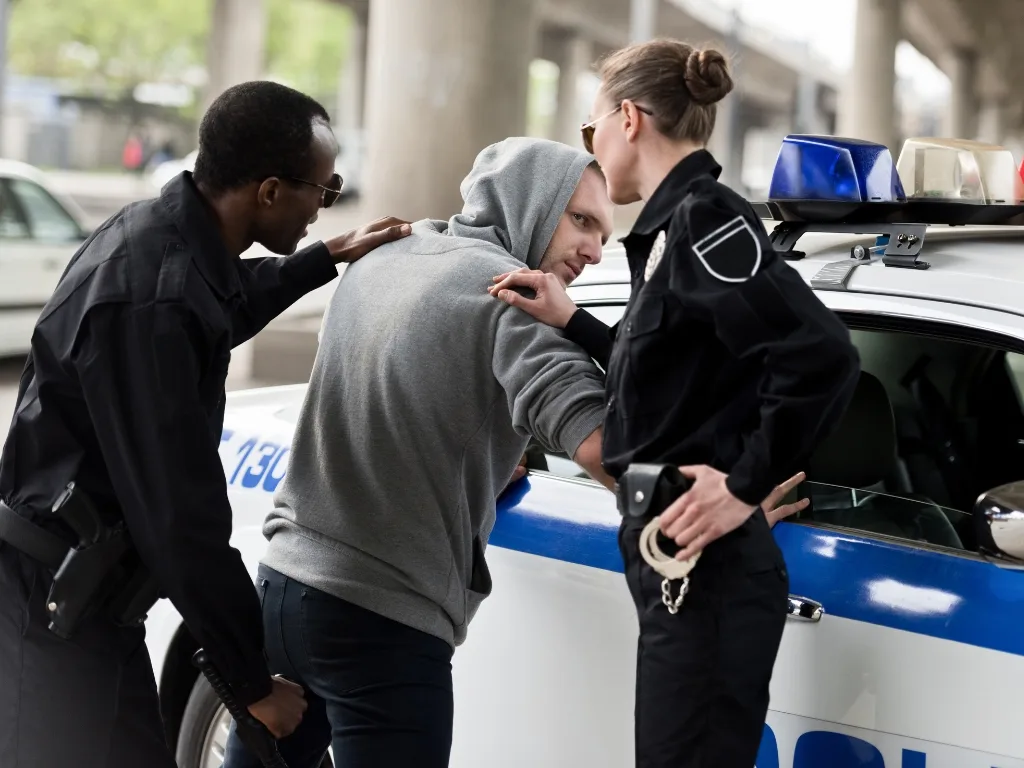
A DUI arrest in California sets two separate legal processes in motion simultaneously, and most people are only aware of one. The criminal case in Fresno County Superior Court determines whether you are convicted, fined, or jailed. The DMV’s Administrative Per Se process runs on its own timeline and determines whether you keep your license. Missing the first deadline in the DMV proceeding can cost you your driving privileges before you ever set foot in a courtroom.
The Law Office of Sam Salhab has represented DUI clients in Fresno for over fifteen years, including as lead attorney in Fresno County’s DUI Court Pilot Program. If you were arrested for DUI, the 10-day DMV clock is already running.
The Two Cases Running Simultaneously
Understanding the difference between these proceedings is the foundation of any effective DUI defense.
The DMV Administrative Per Se Hearing
When you are arrested for DUI in California, the officer confiscates your license and issues a pink DS-367 form that serves as a temporary license for 30 days. Under California Vehicle Code § 13558, you have exactly 10 calendar days from the date of arrest to contact the DMV’s Driver Safety Office and request an Administrative Per Se (APS) hearing. Miss that window and the right to contest the suspension is waived, under Vehicle Code § 14103, and your license is automatically suspended on day 31.
The APS hearing is entirely separate from your criminal case. According to the California DMV, the hearing officer decides only three questions: whether the officer had reasonable cause to believe you were driving under the influence, whether you were lawfully arrested, and whether your BAC was 0.08% or higher. No jury, no presumption of innocence in the same sense as criminal court, and no requirement for proof beyond a reasonable doubt.
The Criminal Case
The criminal case proceeds in Fresno County Superior Court under California Vehicle Code § 23152, which establishes two separate DUI offenses: § 23152(a), driving under the influence of alcohol or drugs, and § 23152(b), driving with a BAC of 0.08% or higher. The prosecution must prove both elements beyond a reasonable doubt.
The criminal court timeline moves through arraignment, pretrial hearings, potential plea negotiations, and, if unresolved, trial. These proceedings are independent of the DMV case, meaning you can win one and lose the other.
DUI Penalties in California
| First DUI | Second DUI | Felony DUI | |
| Jail exposure | 96 hours to 6 months | 10 days to 1 year | 16 months to 3 years (state prison) |
| Fine range | $390 to $1,000 plus penalties | $390 to $1,000 plus penalties | Substantially higher |
| License suspension | 6 months (court) | 2 years | Revocation |
| DUI school | 3 or 9 months | 18 or 30 months | Required |
| IID required | Yes, under AB 91 | Yes | Yes |
| Probation | 3 to 5 years | 3 to 5 years | Varies |
A DUI becomes a felony when any of the following apply:
- The offense involves injury to another person
- The defendant has three or more prior DUI convictions within 10 years
- The defendant has a prior felony DUI conviction
BAC Science and Why It Matters in Defense
Most DUI cases hinge on chemical test results, and the science behind those results is more contested than prosecutors prefer to acknowledge. According to the National Institute on Alcohol Abuse and Alcoholism (NIAAA), alcohol absorption into the bloodstream continues for 30 to 90 minutes after consumption, and BAC continues to rise during that absorption period even after drinking has stopped.
The Rising BAC Defense
This creates the rising BAC scenario: a driver’s BAC at the time of driving was below the legal limit, but had risen to 0.08% or higher by the time a breath test was administered. Since Vehicle Code § 23152(b) criminalizes driving with a BAC of 0.08%, not testing at 0.08%, the timing gap between the traffic stop and the chemical test is often a viable defense issue.
Breath Test Limitations
Breath testing devices measure deep lung air and estimate blood alcohol concentration through a conversion formula that assumes a 2100:1 breath-to-blood ratio. Individual variation in lung capacity, body temperature, and hematocrit levels means this ratio varies person to person. The NHTSA’s Standardized Field Sobriety Testing protocols acknowledge these limitations, and calibration and maintenance records for the specific device used are obtainable through discovery and frequently reveal issues relevant to the test’s accuracy.
Field Sobriety Tests and Their Limitations
The three standardized field sobriety tests, the Horizontal Gaze Nystagmus (HGN), Walk-and-Turn, and One-Leg Stand, were developed and validated by NHTSA under specific controlled conditions. When administered outside those conditions, their reliability as indicators of impairment degrades considerably.
Environmental factors, medical conditions, and officer deviations from protocol all affect test performance. Specific examples include:
- Uneven pavement, passing vehicle headlights, and weather affecting balance tests
- Inner ear disorders, neurological conditions, and certain medications producing results that mimic impairment
- Fatigue creating performance deficits unrelated to alcohol
- Officers deviating from NHTSA’s standardized administration protocols
These are not theoretical arguments — they are established limitations the tests’ own developers acknowledged in the original validation research.
Drug DUI and Prescription Medications
Vehicle Code § 23152(f) makes it a separate DUI offense to drive under the influence of any drug. This includes prescription medications, marijuana, and over-the-counter substances that impair driving ability regardless of whether they are legally obtained.
Drug DUI investigations typically involve a Drug Recognition Expert (DRE) evaluation, a multi-step protocol that assesses physiological indicators of drug impairment. DRE evaluations are subject to their own reliability challenges and can be contested with appropriate expert testimony.
Implied Consent and Chemical Test Refusal
California’s implied consent law, under Vehicle Code § 23612, requires any driver lawfully arrested for DUI to submit to a chemical test. Refusing the post-arrest chemical test carries automatic and severe consequences that are entirely separate from the criminal case.
A first-offense refusal results in a one-year suspension with no restricted license option. A second refusal within ten years results in a two-year revocation. A third or subsequent refusal results in a three-year revocation. Refusal also cannot be used to avoid a DUI conviction; prosecutors can use the refusal itself as evidence of consciousness of guilt.
Common Defense Approaches
Without making predictions about your specific outcome, California DUI defense commonly examines several categories of potential issues:
- Whether reasonable suspicion justified the initial traffic stop
- Whether the arrest itself was supported by probable cause
- Whether field sobriety tests were administered according to NHTSA standards
- Whether the breath testing device was properly calibrated and maintained
- Whether blood sample collection and storage followed the required chain of custody
- Whether the rising BAC defense applies given the timing between driving and testing
Constitutional violations during any stage of the investigation can support a motion to suppress evidence.
Your Next Steps
The DMV 10-day window does not wait for the criminal case to develop. Sam Salhab has conducted over 25 jury trials and brings direct trial experience to every DUI defense, including the strategic use of the DMV hearing to preserve discovery and evaluate the prosecution’s evidence early.
The Law Office of Sam Salhab offers free, confidential consultations with 24/7 availability. Contact the firm today so the DMV hearing can be requested before that 10-day window closes.
Frequently Asked Questions
What happens if I miss the 10-day DMV deadline?
Under Vehicle Code § 14103, missing the deadline waives your right to an APS hearing, and the DMV will automatically suspend your license on day 31 after your arrest. There is no grace period. This is the single most time-sensitive action following a DUI arrest, and it is entirely separate from your criminal court date.
What is the difference between DUI and wet reckless?
A “wet reckless” is a plea reduction from DUI to reckless driving involving alcohol under Vehicle Code § 23103.5. It carries lighter penalties, does not count as a DUI prior for some purposes, and may result in a shorter license suspension. However, it still counts as a prior offense for sentencing purposes if you are arrested for DUI again within 10 years.
Can I refuse a breath or blood test?
You can refuse the post-arrest chemical test, but the consequences are severe and automatic: a minimum one-year suspension with no restricted license option for a first offense, increasing to two and three years for subsequent refusals. Refusing does not prevent a DUI prosecution, and the refusal itself can be used against you as evidence.
Will a DUI stay on my record forever in California?
A DUI conviction stays on your driving record for 10 years for purposes of DMV proceedings and enhanced sentencing in future DUI cases. A criminal conviction under Penal Code § 1203.4 may be eligible for expungement after successful completion of probation, though an expunged DUI conviction still counts as a prior offense for future DUI sentencing purposes.
Can a DUI affect a professional license?
Yes. Many California licensing boards, including those governing healthcare professionals, attorneys, teachers, and commercial drivers, have independent obligations to report DUI convictions and may impose their own disciplinary consequences separate from the criminal court outcome.
Can prescription medication lead to a DUI?
Yes. Vehicle Code § 23152(f) prohibits driving under the influence of any drug, including legally prescribed medications. A driver whose prescription impairs their ability to drive safely can be charged regardless of whether the prescription is valid and taken as directed.
What should I do in the first 24 hours after a DUI arrest?
Request the DMV APS hearing within 10 days, ideally through an attorney who will simultaneously request a stay of suspension and discovery of all evidence the DMV intends to use. Preserve the DS-367 pink form given to you at the time of arrest. Write down everything you remember about the traffic stop, the field sobriety tests, and the chemical testing before details fade. Do not discuss the case on social media.