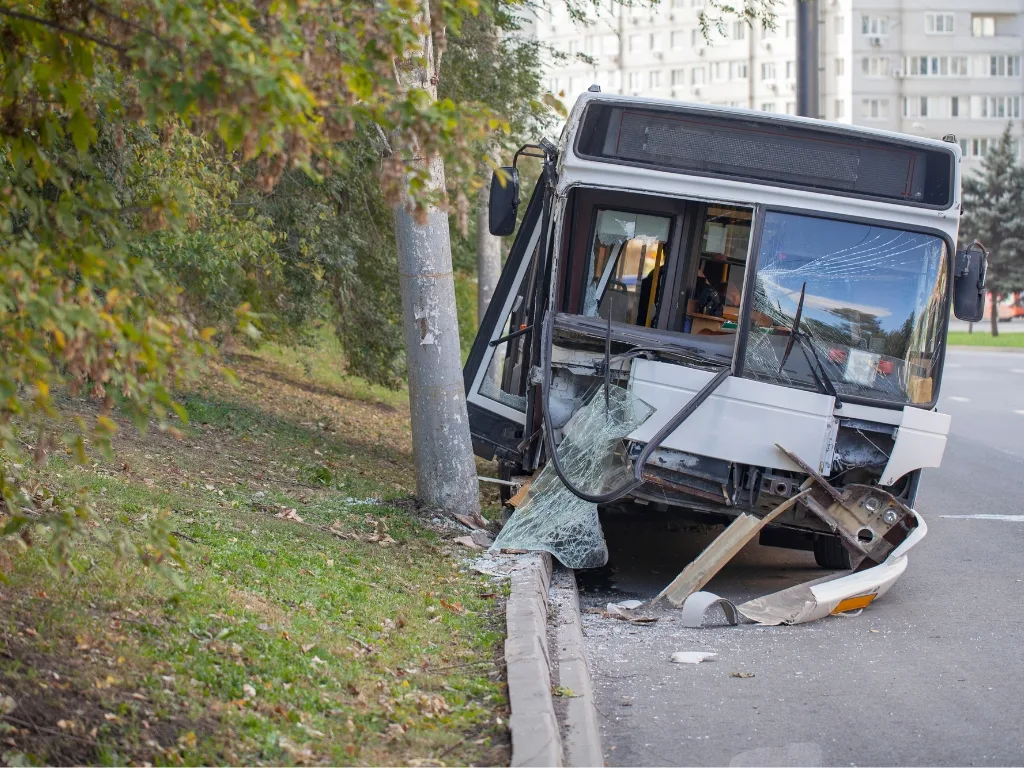
A bus accident can be more legally complex than a standard car crash in ways that are not immediately obvious to the people injured in one. The operator may be a government agency, a private charter company, a school district, or a federal motor carrier, and each of those categories follows different liability rules, different insurance structures, and, critically, different filing deadlines. Knowing which type of operator was involved can be the difference between preserving a valid claim and losing it before you fully understand your rights.
The Law Office of Sam Salhab represents bus accident victims in Fresno and throughout the Central Valley. A free, confidential consultation is available to help you understand exactly what applies to your situation.
Public Transit vs. Private Bus: Why the Distinction Matters
The most important initial question after a Fresno bus accident is who operated the vehicle, because the answer determines which legal framework governs the entire claim.
| Public Transit | Private Bus | |
| Examples | Fresno Area Express (FAX), school buses | Charter buses, tour operators, private motorcoaches |
| Governing oversight | Federal Transit Administration, California state agencies | FMCSA for interstate carriers, CPUC for California carriers |
| Claim procedure | Government Claims Act required before lawsuit | Standard personal injury claim process |
| Key deadline | Six months from incident for government notice | Two years from incident |
This distinction is not a technicality. Missing the government claims deadline in a public transit case permanently bars the lawsuit regardless of how strong the underlying facts are.
The Heightened Duty of Care Owed to Bus Passengers
California law holds bus operators to a higher standard than ordinary drivers. Under California Civil Code § 2100, common carriers must use the utmost care and diligence for safe carriage, provide everything necessary for that purpose, and exercise a reasonable degree of skill. CACI No. 902 instructs California juries that common carriers are responsible for “any, even the slightest, negligence” — a meaningfully stricter standard than the reasonable care required of ordinary drivers.
This heightened duty applies to public and private bus operators alike. It covers vehicle maintenance, driver training and screening, safe passenger boarding and exit, and protection from foreseeable harms. The duty begins when a passenger boards and continues until they safely exit at their destination.
Government Claims: The Shortened Deadline for Public Transit Cases
When a bus accident involves a government-operated transit agency, the standard two-year personal injury filing period under Code of Civil Procedure § 335.1 does not apply first. Before any lawsuit can be filed against a public entity, a formal Government Claims Act notice must be submitted to the responsible agency within six months of the incident.
What the Six-Month Deadline Covers
In Fresno, this applies to claims against Fresno Area Express (FAX), school district bus operations, and any other government-operated transit vehicle. The notice must be filed with the specific public entity responsible, not just any government office. After the agency responds — or fails to respond within 45 days — a six-month window opens to file the actual lawsuit.
Why This Catches People Off Guard
Many injured passengers do not realize they are dealing with a government entity until weeks or months after the crash. The bus may not have been clearly marked as a government vehicle. The six-month window can pass during medical treatment, while the person is still recovering and not yet thinking about legal action.
Consulting an attorney as soon as possible after any bus accident, regardless of who operated the vehicle, is the most reliable way to ensure no deadline is missed.
Federal Oversight of Private Bus Operators
Private bus companies operating across state lines are regulated by the Federal Motor Carrier Safety Administration (FMCSA). This means their drivers must hold commercial driver’s licenses, comply with federal hours-of-service regulations limiting driving time to prevent fatigue, maintain vehicle inspection records, and pass drug and alcohol testing programs. FMCSA also maintains a safety rating database for passenger carriers that reflects inspection history, violation records, and crash data.
California-based charter bus and motorcoach operators are additionally regulated by the California Public Utilities Commission (CPUC), which requires specific licensing as a passenger-stage corporation or charter-party carrier. Violations of these regulatory standards — whether federal or state — can serve as direct evidence of negligence in a civil injury claim.
Who Can Be Held Liable
Bus accident liability frequently extends beyond the driver. Depending on the facts, potentially responsible parties include:
- The bus driver for negligent operation
- The transit agency or private company for negligent hiring, training, or supervision
- A maintenance contractor if mechanical failure caused the crash
- A vehicle or parts manufacturer for defective brakes, tires, or other components
- Another motorist who caused or contributed to the collision
- A government entity responsible for unsafe roadway conditions
Multi-Defendant Claims
When multiple parties share responsibility, each can be pursued independently. California’s comparative fault rules allow each defendant’s liability to be assessed separately, and in serious injury cases, identifying every responsible party is essential to ensuring the full value of the claim is captured.
Evidence That Can Be Preserved Promptly
Bus accidents generate specific categories of evidence that require urgent action to preserve.
Onboard surveillance cameras record continuously and footage may be overwritten within days. GPS data and dispatch communications establish the bus’s route, speed, and operator instructions at the time of the crash. Electronic data recorders on commercial buses function similarly to vehicle black boxes in cars. Driver qualification records and hours-of-service logs show whether the driver was properly trained and legally rested. Maintenance records document whether known defects were addressed before the crash.
An attorney can send preservation letters to the transit agency or private carrier requesting that all of this material be retained before routine deletion policies erase it. This step is most effective within the first days after an accident.
Common Causes of Bus Accidents
The Federal Transit Administration and FMCSA both document recurring causes of serious bus crashes:
- Driver fatigue from extended hours without adequate rest
- Distracted driving, including distraction from passenger interactions
- Brake or tire failures from deferred maintenance
- Improper driver training or inadequate screening
- Speeding relative to road and weather conditions
- Unsafe lane changes, particularly during merging on high-speed corridors
The National Transportation Safety Board (NTSB) has investigated catastrophic bus crashes across the country and consistently identifies maintenance failures, fatigue, and inadequate driver oversight as leading contributing factors, findings that inform how attorneys approach bus accident liability analysis.
What Compensation Is Available
Bus accident victims can recover the full range of California personal injury damages: medical expenses, future treatment and rehabilitation, lost wages, reduced earning capacity, pain and suffering, emotional distress, and permanent disability.
Because buses carry multiple passengers, mass casualty crashes can result in complex multi-plaintiff claims where identifying every potentially liable party and each available coverage source is particularly important to each individual victim’s recovery.
What Happened to You Deserves a Real Answer
A bus crash is disorienting in ways that go beyond the physical injury. You were not in control of the vehicle. You trusted the operator to carry you safely. The confusion of not knowing which entity to contact, which deadlines apply, or whether you are dealing with a government agency or a private company should not be something you navigate alone while you are still trying to recover.
The Law Office of Sam Salhab handles all of those questions from the first consultation forward. Free, confidential consultations are available 24/7, with no fee unless you recover. Bring whatever information you have about the crash, the bus, and the operator, and let the process begin before any deadline runs.
Frequently Asked Questions
Is suing a city bus different from suing a private charter company?
Yes. Claims against a government-operated transit agency require a Government Claims Act notice filed within six months of the incident before any lawsuit can proceed. Private charter company claims follow the standard two-year personal injury limitations period. Identifying who operated the bus immediately after a crash is one of the most time-sensitive steps in any bus accident case.
What if another driver caused the bus crash?
If a third-party driver’s negligence caused the collision, the injured bus passengers can pursue a claim against that driver’s insurance. Depending on the coverage available, the bus operator’s own uninsured or underinsured motorist coverage may also apply. Multiple defendants can be pursued simultaneously.
Can standing passengers recover compensation?
Yes. Passengers who were standing on a transit bus and were injured when the bus stopped suddenly or was struck are entitled to pursue injury claims. Their standing position may be relevant to the damages analysis, particularly if it contributed to the severity of the fall, but it does not bar recovery.
Can surveillance video from the bus be preserved?
Yes, but promptly. Onboard bus camera systems typically record on a loop and footage can be overwritten within days. A preservation letter sent by an attorney to the transit agency or bus company creates a legal obligation to retain the footage before it is lost. This step should happen within the first few days after a crash.
How long do I have to file a bus accident claim in California?
For private bus operators, the standard personal injury limitation is two years from the date of the crash under Code of Civil Procedure § 335.1. For government-operated transit, a Government Claims Act notice must be filed within six months of the incident. Missing the government claims deadline permanently bars the lawsuit. Consulting an attorney as soon as possible ensures the correct deadline is identified before it passes.
What if poor maintenance caused the collision?
Maintenance failures are a recognized cause of serious bus crashes, and the maintenance contractor or the bus company itself can be held liable when documented failures contributed to the collision. Maintenance records, inspection logs, and repair orders are obtainable through formal discovery and often reveal the specific mechanical condition of the vehicle before the crash.
Can I recover if I was injured while boarding or exiting the bus?
Yes. The heightened duty of care owed by common carriers under California Civil Code § 2100 extends to the boarding and exiting process. A passenger who was injured due to an unsafe step, inadequate lighting, a driver-controlled door mechanism, or a bus stopping in an unreasonably dangerous location can pursue a claim based on the same elevated standard that applies during transit.