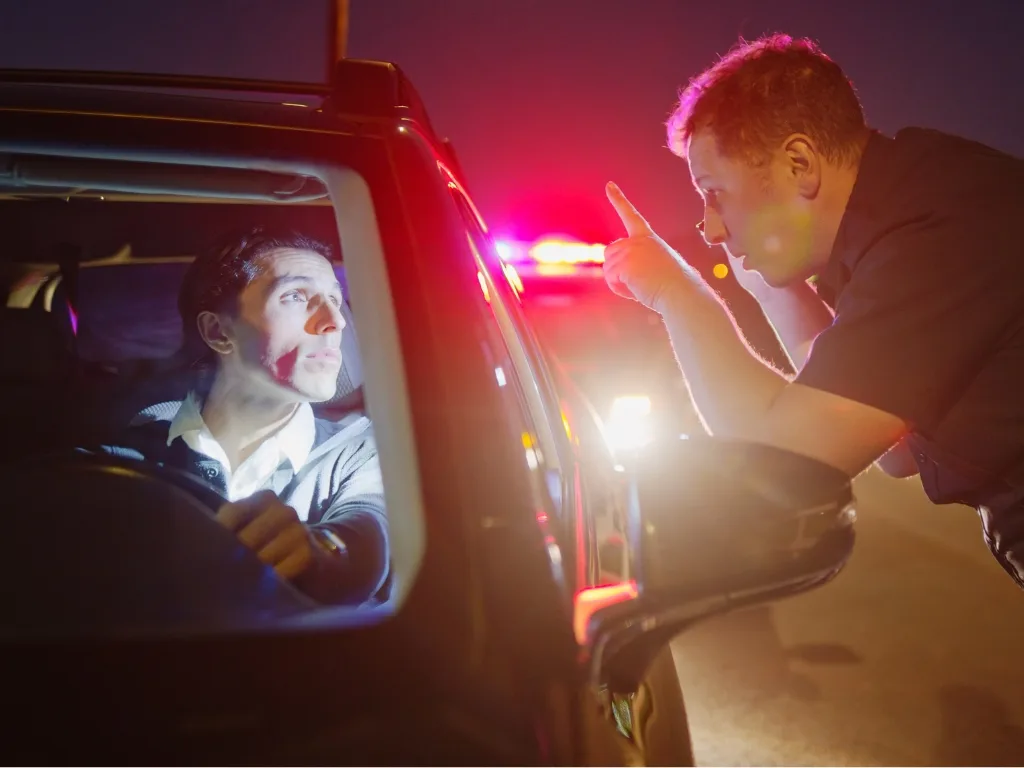
If you are stopped on suspicion of DUI in California, an officer will likely ask you to perform field sobriety tests before making an arrest decision. What most drivers do not know is that these tests are generally voluntary, that only three of them are scientifically validated, and that even those three carry documented accuracy limitations that defense attorneys regularly challenge in court. Understanding how these tests work, and what your rights are before and during them, can meaningfully affect the outcome of a DUI case.
If you are facing DUI charges in Fresno, the Law Office of Sam Salhab offers free, confidential consultations.
Why Field Sobriety Tests Exist
Officers use field sobriety tests during the roadside investigation phase to build probable cause for a DUI arrest. The tests are not a final determination of guilt or innocence — they are a pre-arrest screening mechanism that, along with the officer’s other observations, contributes to the arrest decision.
California’s DUI statute, Vehicle Code § 23152, requires prosecutors to prove beyond a reasonable doubt that a driver was impaired or had a BAC of 0.08% or higher. SFST results are evidence toward that standard, not proof of it.
The Three Standardized Tests
The NHTSA 2023 SFST Participant Manual establishes that only three tests constitute the validated SFST battery: the Horizontal Gaze Nystagmus (HGN), the Walk-and-Turn (WAT), and the One-Leg Stand (OLS). These are the only NHTSA-approved tests for which scientifically validated impairment clues have been identified. Any other test an officer administers, such as reciting the alphabet, counting backwards, or finger-to-nose, has no NHTSA validation behind it.
Horizontal Gaze Nystagmus (HGN)
HGN measures the involuntary jerking of the eye as it tracks a moving stimulus. Officers look for six clues — three in each eye: lack of smooth pursuit, distinct and sustained nystagmus at maximum deviation, and onset of nystagmus prior to 45 degrees. Four or more clues are considered indicative of a BAC at or above 0.08%.
NHTSA’s 1998 San Diego validation study reported HGN at 88% accuracy. However, nystagmus can be caused by inner ear disorders, certain medications, neurological conditions, and head trauma entirely unrelated to alcohol. Deviation from NHTSA’s required stimulus speed and pen angle has been shown in NHTSA’s own robustness research to substantially increase false positive rates.
Walk-and-Turn (WAT)
The Walk-and-Turn is a divided attention test. The officer instructs the subject to take nine heel-to-toe steps along a real or imaginary line, turn, and return nine steps. Officers look for eight clues:
- Cannot keep balance during instructions
- Starts before instructions are finished
- Stops while walking
- Does not touch heel-to-toe
- Steps off the line
- Uses arms to balance
- Improper turn
- Takes incorrect number of steps
Two or more clues are considered indicative of a BAC at or above 0.08%. NHTSA reported WAT accuracy at 79% in the 1998 study. The test explicitly requires a reasonably dry, hard, level, non-slippery surface. NHTSA’s own manual acknowledges that people aged 65 and over, those with back, leg, or inner ear problems, and those wearing heels over two inches may have difficulty unrelated to impairment.
One-Leg Stand (OLS)
The One-Leg Stand requires the subject to stand with one foot raised approximately six inches off the ground, arms at the sides, and count aloud while maintaining balance. Officers look for four clues: swaying, using arms for balance, hopping, and putting the foot down. Two or more clues are indicative of a BAC at or above 0.08%. NHTSA reported OLS accuracy at 83%. The same age, weight, and medical condition exclusions that apply to WAT apply equally to OLS.
Standardized vs. Non-Standardized Tests
| Test | Type | NHTSA Validated |
| Horizontal Gaze Nystagmus | Standardized | Yes |
| Walk-and-Turn | Standardized | Yes |
| One-Leg Stand | Standardized | Yes |
| Recite alphabet | Non-standardized | No |
| Finger-to-Nose | Non-standardized | No |
| Count backwards | Non-standardized | No |
| Rhomberg balance | Non-standardized | No |
Non-standardized tests have no validated accuracy data and no NHTSA-approved clue criteria. Officers still administer them in California, but their evidential weight in court is considerably weaker and more easily challenged.
Your Rights During a DUI Stop
This is where most articles are vague. The legal distinction matters.
Field Sobriety Tests Are Generally Voluntary
California’s implied consent law, Vehicle Code § 23612, applies to post-arrest chemical tests, not to pre-arrest field sobriety tests. A driver who has not yet been arrested is generally not legally required to perform SFSTs. Declining the tests does not carry the same automatic license suspension penalties as refusing a post-arrest breath or blood test.
What Declining an SFST Can Still Mean
Declining field sobriety tests does not prevent an officer from making an arrest. An officer can still establish probable cause through other observations: odor of alcohol, slurred speech, bloodshot eyes, driving behavior, and the driver’s own admissions.
Environmental and Physical Factors That Affect Performance
NHTSA’s own training materials acknowledge that ideal conditions are required for accurate SFST administration, and that performance may be affected by:
- Uneven, sloped, or slippery road surfaces
- Gravel, wet pavement, or debris underfoot
- Poor lighting or glare from passing vehicles
- Wind and weather conditions
- Footwear, particularly heels over two inches in height
- Age (over 65)
- Weight significantly over 50 pounds above ideal body weight
Medical conditions that can independently produce SFST performance failures include inner ear disorders, vertigo, knee or back injuries, arthritis, neuropathy, vision disorders, neurological conditions, and anxiety. An officer who does not account for these factors, or who fails to ask about them, may be administering a test that cannot yield reliable results from the outset.
Why SFST Evidence Is Challenged in Court
SFST results are not self-authenticating evidence. The 1998 NHTSA study reported 91% combined battery accuracy from a population with a mean BAC of 0.122 — well above the legal limit. Real-world accuracy at the threshold BAC of 0.08% is lower.
Common grounds for challenging SFST evidence include:
- Failure to follow NHTSA-standardized instructions verbatim
- Administering tests on an unsuitable surface
- Failure to ask about medical conditions before testing
- Scoring errors or inaccurate clue counts
- Body camera footage that contradicts the officer’s written account
- Officer training records showing deficiencies or gaps in SFST certification
- Environmental conditions not disclosed in the police report
A body camera recording of the SFST administration is often the most important piece of evidence in any challenge. California law requires many law enforcement agencies to use body cameras, and SFST footage frequently reveals deviations from NHTSA protocol that are not mentioned in the officer’s written report.
What Happens After the Tests
Understanding the sequence helps clarify where SFST results fit into the broader DUI process.
- Traffic stop — officer makes initial observations
- Field sobriety testing — if requested and performed
- Arrest decision — based on totality of observations
- Post-arrest chemical test — mandatory under implied consent
- Booking — at the Fresno County jail
- DS-367 pink form issued — 10-day DMV deadline begins
- DMV Administrative Per Se hearing — separate from criminal case
- Arraignment and criminal proceedings
SFST results contribute to the probable cause for the arrest and may be introduced as evidence in both the DMV hearing and the criminal trial. They are one piece of a larger evidentiary picture, not a standalone determination of guilt.
Talk to a DUI Defense Attorney
If SFST results were used to justify your arrest or are being presented as evidence in your case, those results can be evaluated and challenged by an attorney who understands both the NHTSA standards and California DUI law. The Law Office of Sam Salhab offers free, confidential consultations with 24/7 availability.
Frequently Asked Questions
Do I have to take a field sobriety test in California?
Generally no. California’s implied consent law applies to post-arrest chemical tests, not pre-arrest field sobriety tests. You may decline SFSTs without the same automatic license suspension penalties that apply to refusing a breath or blood test after arrest. However, declining does not prevent the officer from making an arrest based on other observations.
What is the difference between a field sobriety test and a breath test?
Field sobriety tests are pre-arrest behavioral assessments used to build probable cause for an arrest. A breath or blood test is a post-arrest chemical measurement of BAC. The two serve different purposes, are governed by different legal standards, and carry different consequences for refusal. Declining a breath test after a lawful arrest triggers automatic license suspension under California’s implied consent law.
Are field sobriety tests scientifically accurate?
NHTSA’s validation research reported combined battery accuracy of 91% in the 1998 San Diego study, with individual tests ranging from 79% (WAT) to 88% (HGN). However, that study involved a population with a mean BAC of 0.122, well above the legal limit. At the threshold 0.08% BAC, accuracy is lower. NHTSA’s own robustness study found substantially elevated false positive rates when HGN was administered with even minor protocol deviations.
Can anxiety affect SFST performance?
Yes. Anxiety can cause physical symptoms including trembling, difficulty balancing, and involuntary eye movements that may superficially resemble impairment indicators. An officer who does not account for the stress of a roadside stop, or who does not ask whether a driver has any medical conditions, may be scoring an anxiety response rather than an impairment response.
Are officers required to follow NHTSA instructions exactly?
NHTSA training materials establish standardized administration procedures specifically because deviation affects reliability. Officers are trained to administer SFSTs according to protocol, and departures from that protocol are a recognized basis for challenging test results. Body camera footage that shows instructions were given incorrectly or that the scoring process deviated from NHTSA clue criteria is directly relevant evidence.
Can poor road conditions affect SFST results?
Yes, and NHTSA’s own manual acknowledges this. The Walk-and-Turn requires a dry, hard, level, non-slippery surface. The One-Leg Stand similarly requires a suitable surface. An officer who administers these tests on gravel, a sloped shoulder, or wet pavement in the dark, without accounting for or noting those conditions, may be generating performance data that does not reflect the driver’s actual coordination under neutral conditions.
Can SFST results be thrown out?
SFST results can be challenged through a motion to suppress or by attacking their weight and reliability at trial. If the tests were administered in violation of NHTSA protocol, under unsuitable conditions, or by an officer whose training was deficient, the defense can argue the results lack sufficient reliability to support the prosecution’s case. Body camera footage, the officer’s training records, and the written report are all materials an attorney will review.