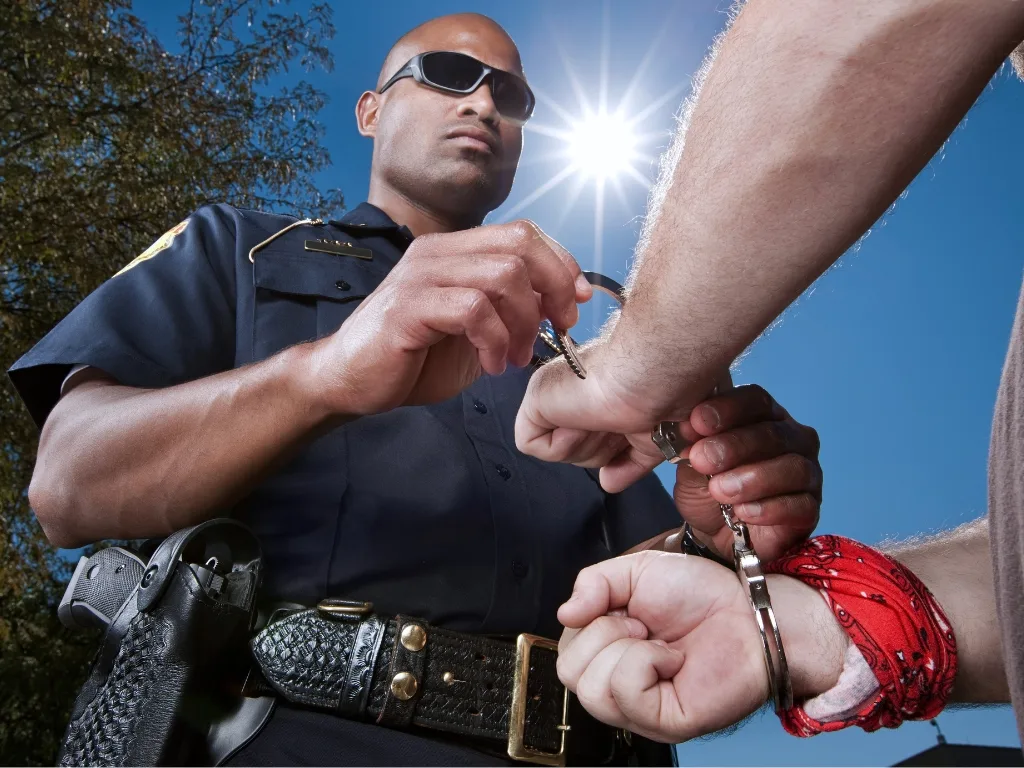
Being arrested without justification is a violation of your constitutional rights — and in California, it can be the basis of a civil lawsuit. False arrest claims arise when an officer detains someone without a valid warrant and without probable cause, exposing both the individual officer and the municipality to legal liability. The law provides two distinct pathways to pursue accountability, and understanding both is the starting point for protecting yourself.
The Law Office of Sam Salhab has represented clients across California in criminal defense matters since 2010. Attorney Sam Salhab has conducted over dozens of jury trials, holds a Superb rating from AVVO, and has been recognized by Super Lawyers Magazine as a Rising Star three consecutive years — 2014, 2015, and 2016. If you believe you were unlawfully arrested, a free and confidential consultation with the Salhab team is the right first step.
What Qualifies as a False Arrest in California
Under California law, a false arrest is treated as a form of false imprisonment: the intentional, unlawful restraint of a person without consent and without legal authority. California Civil Jury Instructions (CACI No. 1400) require a plaintiff to prove they were detained without a valid warrant and without probable cause — both conditions must be absent for the arrest to be deemed unlawful.
Probable cause requires a “fair probability” that a crime occurred, evaluated against what the officer objectively knew at the moment of the arrest — not what later investigation revealed. A mistaken arrest is not automatically a false arrest. The legal line is crossed when no reasonable officer, given the same information, could have concluded that probable cause existed.
Two Legal Pathways to Sue Police in California
Suing Under 42 U.S.C. § 1983
The primary federal tool for suing law enforcement is 42 U.S.C. § 1983, the Civil Rights Act of 1871, which allows individuals to sue state actors for violating constitutional rights under color of law. False arrest claims under § 1983 are grounded in the Fourth Amendment’s prohibition against unreasonable seizures.
A frequently overlooked feature of § 1983 claims is that prevailing plaintiffs can recover attorney’s fees under 42 U.S.C. § 1988 — making civil rights litigation financially viable even when individual damages are modest. This provision was designed to give wrongfully treated individuals genuine access to the courts regardless of their personal financial resources.
California State Law — False Imprisonment
Under California Penal Code § 236, false imprisonment is the unlawful violation of a person’s liberty. State claims against public entities are governed by the Government Claims Act (California Government Code § 810 et seq.), which requires filing a formal tort claim before any lawsuit can proceed in state court.
Both legal theories can arise from a single unlawful arrest. An officer who detains someone without probable cause may simultaneously violate the Fourth Amendment and commit false imprisonment under California tort law. Experienced attorneys evaluate both pathways and frequently pursue them together to maximize the strength and value of the case.
Who Can Be Sued — Officer, City, or County
Individual officers are the most direct defendants in false arrest cases, but their personal liability is substantially limited by qualified immunity. The more financially significant defendant is often the municipality: cities and counties may be held liable under Monell v. Department of Social Services, 436 U.S. 658 (1978), which established that local governments can be sued under § 1983 when an official policy, practice, or custom caused the constitutional violation.
Monell claims require evidence that the harm arose from a systemic pattern — inadequate training, a standing department directive, or supervisory tolerance of unlawful conduct — rather than a single officer’s isolated decision. These claims are more complex to prove, but they are often the most effective path to full accountability when individual officer immunity limits direct recovery.
Qualified Immunity: The Biggest Obstacle to Your Claim
Qualified immunity is a federal doctrine that shields officers from personal liability unless they violated a “clearly established” legal right — meaning prior court decisions had already ruled, in factually similar circumstances, that the same conduct was unconstitutional. Courts also apply an “arguable probable cause” standard, protecting officers who could have reasonably believed their interpretation of the facts was lawful, even if it was ultimately wrong.
This doctrine is the most common reason valid false arrest claims are dismissed before trial. It is not, however, an automatic barrier. Cases where an arrest was made with zero factual basis — or where the violated right was unambiguously established in prior case law — regularly survive qualified immunity challenges, which is why having an attorney who knows California civil rights litigation makes a material difference.
What Damages Are Available After a False Arrest
A successful false arrest claim can result in three categories of compensation. Economic damages cover measurable losses: wages lost during detention, costs of defending the criminal charges that followed, and any related medical expenses. Non-economic damages address the personal toll — emotional distress, reputational harm, and the psychological impact of being wrongfully detained and publicly accused.
Punitive damages are available in § 1983 cases when the officer’s conduct was shown to be malicious or in reckless disregard of the plaintiff’s rights — awarded to deter future misconduct, not simply to compensate the plaintiff. Combined with the attorney’s fee provision under § 1988, the federal civil rights damages framework gives wrongfully arrested individuals real financial leverage when pursuing accountability.
Deadlines and Evidence That Determine Your Case
California’s Government Claims Act, under Government Code § 911.2, requires a formal tort claim against a public entity to be filed within six months of the incident before any state court lawsuit can proceed. Missing this deadline almost always bars state law claims regardless of merit. Federal § 1983 claims allow two years, but body camera footage, dispatch logs, and witness accounts deteriorate quickly — prompt action matters on both fronts.
The outcome of the criminal case directly affects any civil claim. If charges were dismissed or you were acquitted, that result strengthens the argument that no probable cause existed at the time of arrest. A conviction arising from the same arrest, conversely, significantly complicates — and in most cases effectively bars — a false arrest claim based on those same facts.
Talk to the Law Office of Sam Salhab — Free Consultation
A false arrest can affect your employment, housing, and peace of mind for years after the fact. The Law Office of Sam Salhab provides free, confidential consultations with no obligation — available by phone, in person, and for jail interviews when the circumstances require. Attorney Sam Salhab is admitted to the State Bar of California and the Eastern District of California Federal Court, and represents clients throughout the state from offices in Fresno and Orange County.
The firm’s main criminal defense office is located at 2445 Capitol Street, Suite 140, Fresno, CA 93721 — in the Civic Center Square Building at the corner of Tulare and M Street — reachable at (559) 412-9888 or Sam@Salhablaw.com. Orange County clients can contact the Irvine office at 17901 Von Karman Ave #665, Irvine, CA 92614, by calling (949) 910-3472. Review Sam Salhab’s background and track record before your first call — and come to that conversation informed.
FAQs
Can I sue the police if my charges were dropped?
Yes. A dismissed charge supports a false arrest claim because it indicates the prosecution lacked sufficient evidence to proceed. It does not automatically prove the arrest was unlawful, but it removes one of the government’s central defenses and is a directly relevant fact in any subsequent civil case.
How long do I have to sue the police for false arrest in California?
Under California Government Code § 911.2, you have six months from the date of the incident to file a government tort claim before suing a public entity in state court. Federal § 1983 claims allow two years. Missing the six-month window is almost always fatal to state law claims, regardless of how strong the underlying facts are.
Can I sue if the officer was acting on a tip from someone else?
Possibly. Officers may rely on tips from named, credible witnesses when establishing probable cause. Anonymous or facially unreliable tips require independent corroboration before they can legally justify an arrest. If an officer acted on a bare tip without any independent investigation, courts have found that probable cause was lacking.
What is Monell liability and does it apply to my case?
Monell liability, established by the U.S. Supreme Court in Monell v. Department of Social Services (1978), allows individuals to sue a city or county under § 1983 when an official policy, practice, or custom caused the constitutional violation — not just one officer’s isolated conduct. If your arrest resulted from a systemic pattern within the department, the municipality itself may carry shared legal responsibility.
Does being arrested without a warrant make my claim stronger?
Yes. Warrantless arrests receive heightened Fourth Amendment scrutiny. California Penal Code § 836 permits warrantless felony arrests where probable cause exists, but the absence of a warrant is a threshold fact courts examine closely — and it shifts the justification burden onto the government in litigation.
What is the difference between false arrest and malicious prosecution?
False arrest addresses the legality of the initial detention — whether probable cause existed at the moment of arrest. Malicious prosecution is a separate claim addressing the decision to file criminal charges without probable cause, with malice, in a case that ultimately ended in the plaintiff’s favor. Both can arise from the same incident but involve different legal elements and different points in the timeline.
Can I recover compensation for emotional distress caused by a false arrest?
Yes. Emotional distress damages — including anxiety, PTSD, sleep disruption, and lasting psychological harm — are recoverable as non-economic damages in both federal § 1983 claims and California state false imprisonment actions. Courts weigh the severity and duration of the psychological impact, which is typically supported by documentation from a treating mental health professional.