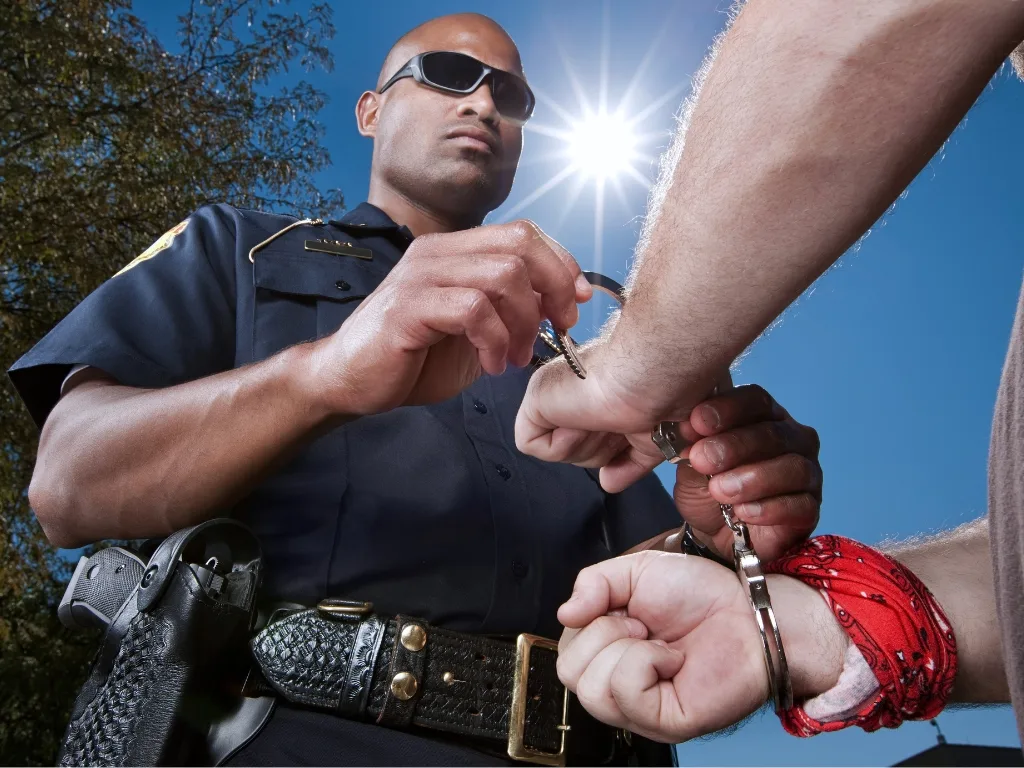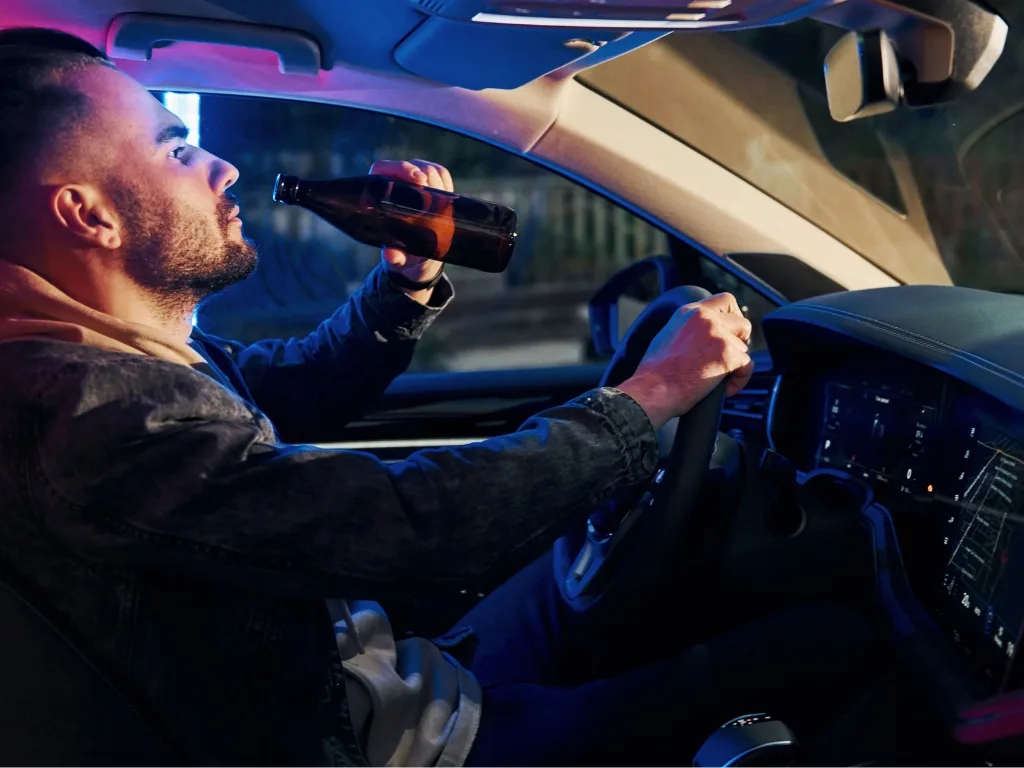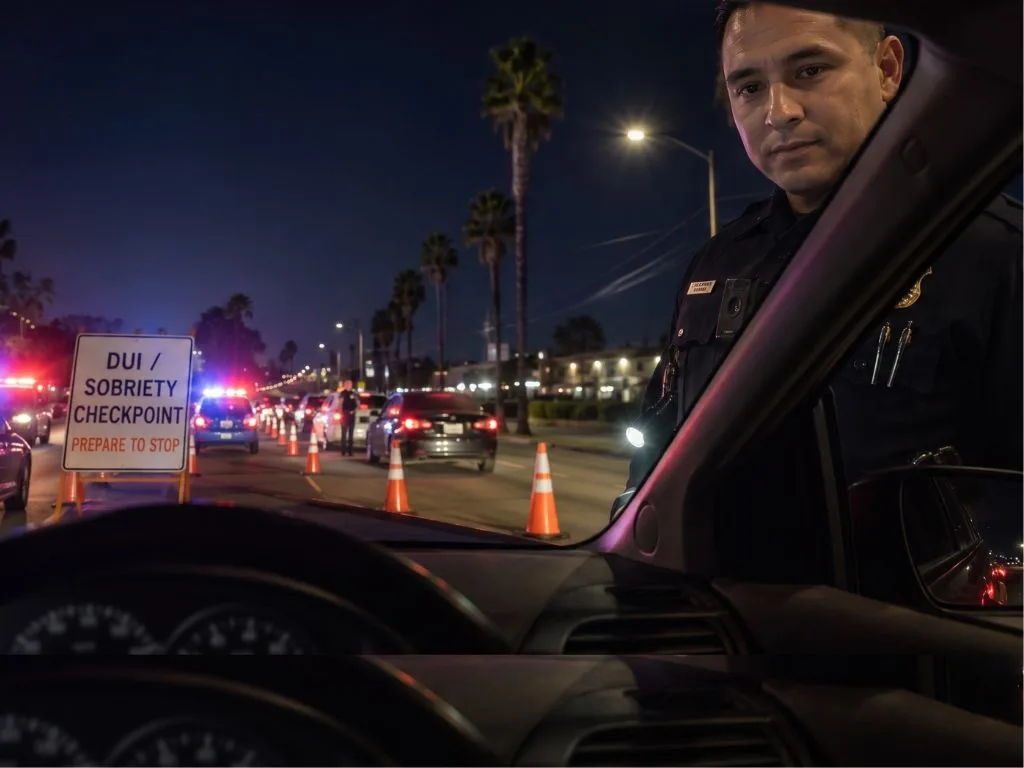
When red and blue lights signal a DUI checkpoint ahead, anxiety sets in fast — even for drivers who have done nothing wrong. Knowing your rights at a California sobriety checkpoint could be the most important thing you do to protect your freedom. The Law Office of Sam Salhab has defended thousands of Californians against DUI charges since 2010, and we want you fully prepared before you ever reach that stop.
Based in Fresno and serving all of California, our firm operates on one unshakeable belief: you are not a case number — you are a person, and you deserve to be treated that way. Whether you are reading this as a precaution or after a checkpoint arrest, this guide is here to give you clarity and genuine peace of mind.
Are DUI Checkpoints Legal in California?
Yes — but only under strict constitutional conditions. In Ingersoll v. Palmer (1987), the California Supreme Court upheld sobriety checkpoints as constitutional, provided police follow specific operational standards. The U.S. Supreme Court reinforced this in Michigan Department of State Police v. Sitz (1990), ruling that properly conducted checkpoints do not violate the Fourth Amendment.
These rulings impose real obligations on law enforcement — and when police fail to meet them, evidence from the stop can be challenged and suppressed. An experienced Fresno DUI attorney knows exactly what to look for and how to use those failures in your defense.
The Statutory Basis
California Vehicle Code § 2814.2 authorizes sobriety checkpoints and requires drivers to stop when directed. This same statute places firm legal obligations on law enforcement — obligations that, when violated, can render the entire checkpoint constitutionally defective and your arrest legally challengeable.
What Are the Legal Requirements for a Lawful Checkpoint?
Under the Ingersoll framework, California courts require checkpoints to meet eight distinct standards: supervisory oversight, a neutral vehicle-selection formula, adequate safety measures, reasonable detention times, and advance public notice of the time and location. Each requirement shields drivers from arbitrary policing — and each is a potential lever for your defense.
If officers deviated from the selection formula, failed to publicly announce the checkpoint, or lacked proper supervision, those failures can become powerful grounds for dismissal. A skilled Fresno criminal attorney will obtain checkpoint logs and operational plans to scrutinize every procedural detail of your stop.
When a Checkpoint Can Be Challenged
In People v. Banks (1993), the California Supreme Court clarified that lack of advance publicity alone does not automatically invalidate a checkpoint. Combined with other procedural failures, however, it significantly strengthens a defense challenge. If any Ingersoll requirement was unmet the night you were stopped, the stop itself may be unconstitutional and all resulting evidence suppressible.
Do You Have to Stop at a DUI Checkpoint?
Under California Vehicle Code § 2814.2, you must stop when directed by signs or officers. However, if you spot a checkpoint ahead and can legally and safely turn before entering the checkpoint zone — without committing any traffic violation — you are permitted to do so. A legal turn is a constitutional right, not grounds for a stop, and courts have consistently upheld this position.
What you cannot do is execute an illegal U-turn, run a red light, or violate any traffic law to avoid the checkpoint. Any independent infraction gives officers separate justification to pull you over — choosing a legal route is never an admission of guilt.
Your Rights During a Checkpoint Stop
At a checkpoint you must provide your driver’s license, vehicle registration, and proof of insurance. Beyond those three items, your constitutional rights remain fully intact. The Fifth Amendment protects your right to remain silent — you are not required to answer questions about your destination or alcohol consumption. Politely stating you are exercising your right to remain silent is completely lawful.
You also have the right to refuse a vehicle search without a warrant or probable cause. Asserting that right calmly is not obstruction. According to the ACLU Know Your Rights guide, what you say — and what you do not say — during a police encounter can directly affect the outcome of any subsequent legal proceedings.
Key Rights at a Glance
- Provide license, registration, insurance — Required
- Answer questions about alcohol or destination — Not required
- Consent to a vehicle search — Not required without a warrant
- Field sobriety tests before arrest — Voluntary for most adults over 21
- Chemical test after a lawful arrest — Required under Implied Consent Law
Can You Refuse a Sobriety Test at a Checkpoint?
Field sobriety tests — walk-and-turn, one-leg stand, horizontal gaze nystagmus — are voluntary for most adult drivers before an arrest. You may decline without automatic legal penalty, though an officer may still use observed behavior to establish probable cause. Refusing the pre-arrest portable breath test (PAS) is also generally permitted for drivers over 21 who are not on DUI probation.
Once lawfully arrested, California’s Implied Consent Law requires a chemical breath or blood test. Refusing after arrest carries a one-year license suspension for a first offense — imposed by the DMV independently of any criminal court outcome. This is one reason why calling a Fresno DUI lawyer immediately after arrest is so critical to protecting your rights on both fronts.
What Happens After a Checkpoint DUI Arrest?
A DUI arrest triggers two simultaneous proceedings: a criminal court case and a California DMV Administrative Per Se (APS) suspension hearing. The criminal case under Vehicle Code § 23152 can result in fines, jail time, DUI school, and a permanent record. The DMV process can suspend your license even if you are never convicted in criminal court.
After arrest you have just 10 calendar days to request a DMV APS hearing — miss it and your suspension becomes automatic with no opportunity to contest it. The Law Office of Sam Salhab acts on this deadline immediately for every new DUI client. Do not wait: contact our firm the same day as your arrest.
The Critical 10-Day DMV Window
The DMV hearing runs on its own timeline, completely separate from criminal court, and requires its own legal strategy. Many drivers lose their license not from a conviction, but simply from missing this deadline — a mistake a dedicated DUI defense attorney will never allow.
How the Law Office of Sam Salhab Defends Your Case
Sam Salhab has conducted over 25 jury trials and successfully litigated thousands of DUI cases throughout California. Honored as a Super Lawyers Rising Star three consecutive years, named a Newsweek Legal Superstar, and listed in the National Trial Lawyers Top 40 Under 40, Sam brings nationally recognized courtroom experience to every case.
Our defense is immediate and comprehensive: we investigate every Ingersoll requirement, challenge breathalyzer calibration, scrutinize blood test chain-of-custody, represent you at your DMV hearing, and fight for dismissal, reduction, or acquittal. No unanswered questions — just a dedicated team in your corner from day one.
Contact Us — Free Consultation Available 24/7
If you were stopped at a California DUI checkpoint, do not wait. The 10-day DMV deadline begins immediately. Call us now for a free, fully confidential consultation — available 24/7, including jail interviews. We offer flexible payment plans, plus student and military discounts. Schedule your free consultation today.
Fresno — Criminal Defense Headquarters
- Address: 2445 Capitol Street, Suite 140, Fresno, CA 93721
- (Civic Center Square Building, corner of Tulare & M Street)
- Phone: (559) 412-9888
- Email: Sam@Salhablaw.com
- Website: www.salhablaw.com
Orange County — DUI & Criminal Defense
- Address: 17901 Von Karman Ave #665, Irvine, CA 92614
- Phone: (949) 910-3472
- Email: Sam@Salhablaw.com
FAQs
Can I be stopped at a checkpoint even if I haven’t been drinking?
Yes. Checkpoints use a neutral selection formula — such as every third vehicle — regardless of observed behavior. Officers cannot detain you further unless they develop independent probable cause during that brief stop. Simply being waved through the checkpoint does not give police grounds to hold you.
Must California DUI checkpoints be publicly announced in advance?
Advance publicity is one of the eight Ingersoll requirements. Agencies are expected to announce checkpoint locations through press releases or social media before the operation. Lack of publicity alone does not void a checkpoint under People v. Banks, but paired with other violations it strengthens a constitutional challenge considerably.
What if I was taking a legally prescribed medication when I was stopped?
California’s DUI law covers impairment by any substance, including lawfully prescribed medications such as opioids or sleep aids. You can be arrested and charged even if you followed your prescription exactly. A defense attorney can retain toxicology experts to challenge whether your driving ability was actually impaired at the time of the stop.
Can a DUI from a checkpoint affect my professional license?
It can. Many California licensing boards — including those for nurses, teachers, contractors, and commercial drivers — require disclosure of DUI arrests and convictions. Failing to disclose when required compounds your legal exposure significantly. A skilled defense attorney can help minimize professional fallout alongside the criminal proceedings.
What is retrograde extrapolation and how can it be challenged?
Retrograde extrapolation is used by prosecutors to estimate your BAC at the time of driving based on a later chemical test. It relies on assumptions about alcohol absorption and elimination rates that vary by individual. A defense expert can challenge these assumptions using your specific physiology, meal timing, and the gap between your arrest and the test.
Does the Law Office of Sam Salhab handle DUI cases outside Fresno?
Yes. The firm represents clients throughout all of California, including Orange County, the Central Valley, and the Bay Area. With offices in Fresno and Irvine and experience in both state and federal courts, Sam Salhab’s team is equipped to defend checkpoint DUI cases wherever they arise in the state.
If my checkpoint charge is dismissed, can I clear my arrest record?
A dismissed charge leaves no conviction, but an arrest record may still exist and can be addressed through a separate petition. For clients who were convicted but later become eligible, the Law Office of Sam Salhab handles expungements and files within 48 hours of engagement — helping restore employment prospects, housing opportunities, and peace of mind.